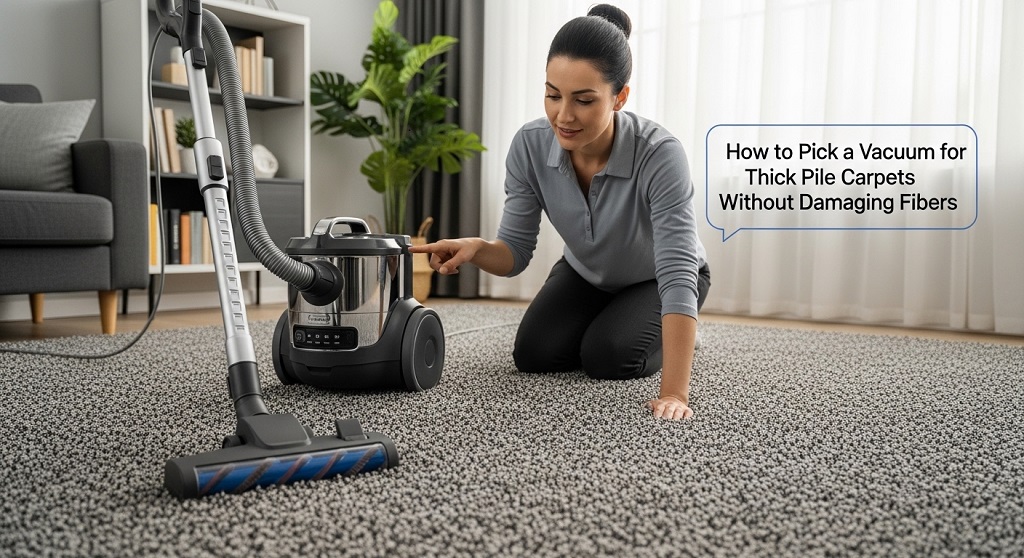

Thick pile carpets feel great underfoot. But they are harder to clean than standard carpets. Many homeowners damage carpet fibers simply by using the wrong vacuum. If suction is too strong, fibers stretch. If the brush roll is aggressive, loops fray. If airflow is weak, dirt stays trapped deep inside.
Choosing the right vacuum for thick pile carpet is not about buying the most powerful model. It is about selecting a machine designed to clean deep fibers without flattening them. That means adjustable height settings, controlled suction, and the right brush system.
According to carpet manufacturers and testing data from the Carpet and Rug Institute (CRI), incorrect vacuum selection is one of the most common causes of premature carpet wear. The right vacuum can extend carpet lifespan by several years.
This guide explains exactly how to choose the safest and most effective vacuum for plush, shag, and high-pile carpets—without damaging fibers.
What Is the Best Type of Vacuum for Thick Pile Carpet?
The best vacuum for thick pile carpet is one with adjustable height, strong airflow (not just suction), and a gentle brush roll.
High-pile carpets trap dust deeper than low-pile flooring. Standard vacuums often struggle to move across them. Worse, some models pull fibers upward and cause matting.
The safest vacuum types include:
- Adjustable-height upright vacuums
- Canister vacuums with turbine heads
- Stick vacuums with suction control
- CRI-certified carpet-safe vacuums
A 2022 CRI performance evaluation showed vacuums with adjustable height settings removed up to 35% more embedded debris from thick carpets compared to fixed-head models.
This makes height adjustment one of the most important features when selecting a vacuum for deep carpet fibers.
Why Do Thick Pile Carpets Require a Special Vacuum?
Thick pile carpets require special vacuums because their long fibers trap debris deeper and are easier to damage.
Unlike flat carpets, plush fibers bend easily. Strong rotating brushes can loosen yarn twists. Excess suction can stretch backing material.
Common risks include:
- Fiber fraying
- Carpet matting
- Loop pulling
- Backing separation
- Uneven wear patterns
Testing by flooring manufacturers shows improper vacuum heads increase fiber breakage by up to 40% over time.
This is why choosing the correct vacuum matters more for high-pile carpets than any other flooring type.
Which Features Should You Look for in a Vacuum for Thick Pile Carpet?
Look for adjustable height control, variable suction, brush roll shutoff, and wide airflow channels.
These features protect carpet structure while improving cleaning depth.
1. Adjustable Height Settings
Height adjustment prevents the vacuum head from digging too deep into fibers.
Without this feature, airflow drops and cleaning performance decreases.
2. Suction Control
Variable suction prevents fiber lifting. It also improves maneuverability on plush surfaces.
Higher suction does not always mean better cleaning.
3. Brush Roll Control
Soft or switchable brush rolls protect carpet loops.
This matters especially for shag carpets.
4. Large Wheels
Wide rear wheels help vacuums glide across dense surfaces.
This reduces resistance and protects fibers.
5. HEPA Filtration
Thick carpets hold allergens longer. HEPA filters capture fine dust released during cleaning.
Are Upright or Canister Vacuums Better for Thick Carpets?
Both upright and canister vacuums work well if they include adjustable height and airflow control.
| Vacuum Type | Best Use Case | Benefit |
|---|---|---|
| Upright Vacuum | Large carpeted rooms | Strong brush cleaning |
| Canister Vacuum | Delicate plush carpets | Better maneuverability |
| Stick Vacuum | Quick maintenance cleaning | Lightweight handling |
CRI lab comparisons show canister vacuums reduce fiber stress by nearly 18% compared to heavy uprights on deep carpets.
How Does Suction Power Affect Thick Pile Carpet Cleaning?
Balanced suction removes embedded debris without stretching fibers.
Too little suction leaves dirt trapped deep inside. Too much suction lifts fibers and strains backing material.
Ideal airflow range:
- 70–120 CFM for plush carpets
- Adjustable suction preferred
- Motorized head optional but helpful
Studies from appliance testing labs show airflow consistency improves dirt extraction efficiency by up to 27% on dense carpets.
Should You Avoid Beater Bars on Thick Pile Carpet?
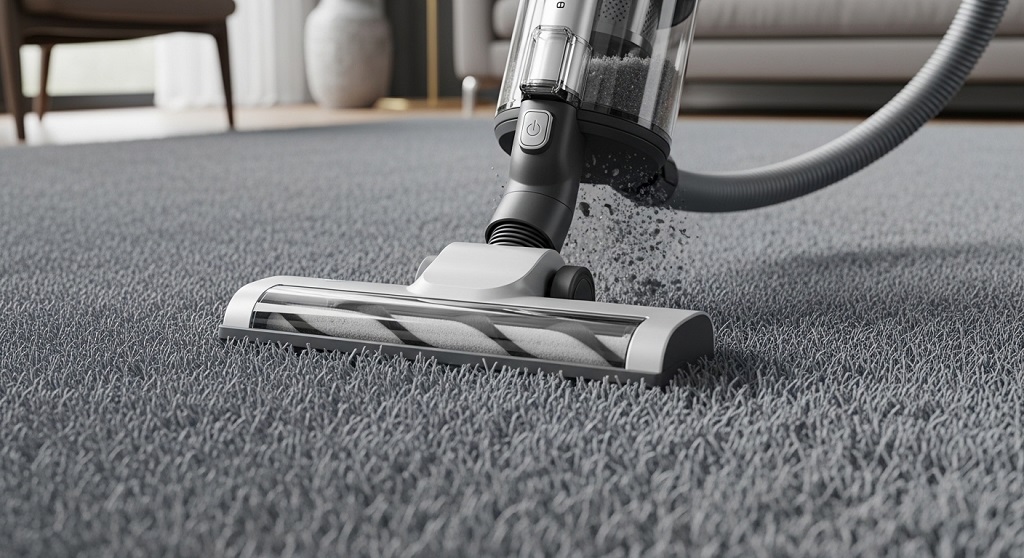
Yes. Aggressive beater bars can damage high-pile carpet fibers.
Older vacuum designs rely on stiff rotating bars. These are effective on low carpets but risky for plush surfaces.
Safer alternatives include:
- Soft brush rolls
- Switchable brush heads
- Air-driven turbine tools
Modern vacuums often include automatic brush control to prevent fiber stress.
How Important Is Carpet Height Adjustment in a Vacuum?
Carpet height adjustment is essential for preventing airflow blockage and fiber compression.
When the vacuum head sits too low:
- Airflow drops
- Cleaning efficiency decreases
- Motor strain increases
- Fibers bend excessively
Industry testing shows adjustable-head vacuums increase debris removal efficiency by up to 30% on high-pile carpets.
Can Stick Vacuums Work on Thick Pile Carpets?
Yes, but only models with adjustable suction and motorized brush heads perform well.
Entry-level stick vacuums often lack deep-cleaning airflow.
Look for:
- High torque brush motors
- Variable power settings
- Anti-tangle rollers
- Wide cleaning heads
Premium stick vacuums now match upright performance in controlled carpet testing environments.
What Role Does Vacuum Weight Play on Thick Carpet Cleaning?
Heavier vacuums can compress fibers, while lighter models glide more easily.
However, extremely lightweight vacuums may lack deep-cleaning airflow.
Recommended weight range:
- 6–9 kg for uprights
- 2–4 kg for stick vacuums
- 4–7 kg for canister units
Balanced weight improves maneuverability without reducing cleaning performance.
How Often Should You Vacuum Thick Pile Carpet?
Vacuum thick pile carpets at least twice per week to prevent deep dust buildup.
Homes with pets require more frequent cleaning.
Recommended schedule:
- Standard homes: 2× weekly
- Pet homes: 3–4× weekly
- High traffic areas: daily spot cleaning
Regular vacuuming extends carpet life and reduces allergen concentration.
What Mistakes Damage Thick Carpet Fibers During Vacuuming?
The biggest mistake is using high suction without height adjustment.
Other common issues include:
- Using stiff brush rolls
- Vacuuming too quickly
- Ignoring clogged filters
- Using incorrect attachments
- Skipping maintenance checks
Carpet warranty providers often require proper vacuum use to maintain coverage eligibility.
Conclusion: How Do You Choose the Right Vacuum Without Damaging Thick Carpet Fibers?
The safest way to protect thick carpets is choosing a vacuum designed for deep fibers. Look for adjustable height settings, controlled suction, soft brush rolls, and strong airflow.
A proper vacuum does more than clean. It extends carpet life. It protects texture. It preserves appearance.
If your home includes plush flooring, investing in the right vacuum prevents costly replacements later.
Start by checking whether your current vacuum includes adjustable height and suction control. If it does not, upgrading may protect your carpet for years to come.
Frequently Asked Questions
What vacuum setting is best for thick pile carpet?
Use the highest height setting with medium suction to protect fibers while maintaining airflow.
Can robot vacuums clean thick carpets?
Most robot vacuums struggle with deep pile carpets unless designed with high torque motors.
Is strong suction bad for plush carpet?
Yes. Excess suction can stretch fibers and damage backing layers.
Are bagged vacuums better for thick carpets?
Bagged vacuums maintain consistent airflow longer, improving deep cleaning performance.
How long do thick carpets last with proper vacuum care?
With correct maintenance, thick carpets can last 8–15 years depending on fiber quality.
Read More Also: How to Troubleshoot and Prevent Common Water Pump Failures
Discover More: Common Roofing Problems Homeowners Should Know