
Every homeowner faces a plumbing problem at some point. A dripping faucet, a slow drain, or a running toilet can happen without warning. Having the right tools at home can save you time, money, and a lot of frustration. However, many people do not know where to start when building their collection.
This guide walks you through everything you need to know. You will learn how to build a solid plumbing equipment checklist that covers both basic repairs and more complex tasks. Whether you are a first-time homeowner or someone looking to upgrade their supplies, this tool guide is designed to help you feel prepared and confident.
Why Every Homeowner Needs Plumbing Tools
Calling a plumber for every small issue can get expensive fast. Many common plumbing problems are easy to fix on your own. All you need is a little knowledge and the right equipment.
Additionally, having tools ready means you can act fast when something goes wrong. A burst pipe or an overflowing toilet cannot wait for a service appointment. When you have the essentials on hand, you can handle the situation before it gets worse.
Beyond emergencies, basic tools also help with routine maintenance. Cleaning drains, checking pipe connections, and replacing worn washers are simple tasks that keep your plumbing system in good shape. Therefore, investing in a solid set of tools is always a smart decision for any homeowner.
The Foundation: Basic Hand Tools You Should Always Have
Before moving on to more specialized equipment, start with the basics. These are the tools every homeowner should own from day one.
Plungers
A plunger is the first tool most people think of, and for good reason. You should actually have two types. A cup plunger works well for sinks and tubs. A flange plunger is designed for toilets. They look similar, but the extra rubber flap on the flange plunger creates a better seal in toilet bowls.
Using the right plunger makes a big difference. Push down slowly and pull up sharply to create suction. Repeat this several times before lifting the plunger. Most clogs will clear within a minute or two.
Pipe Wrenches
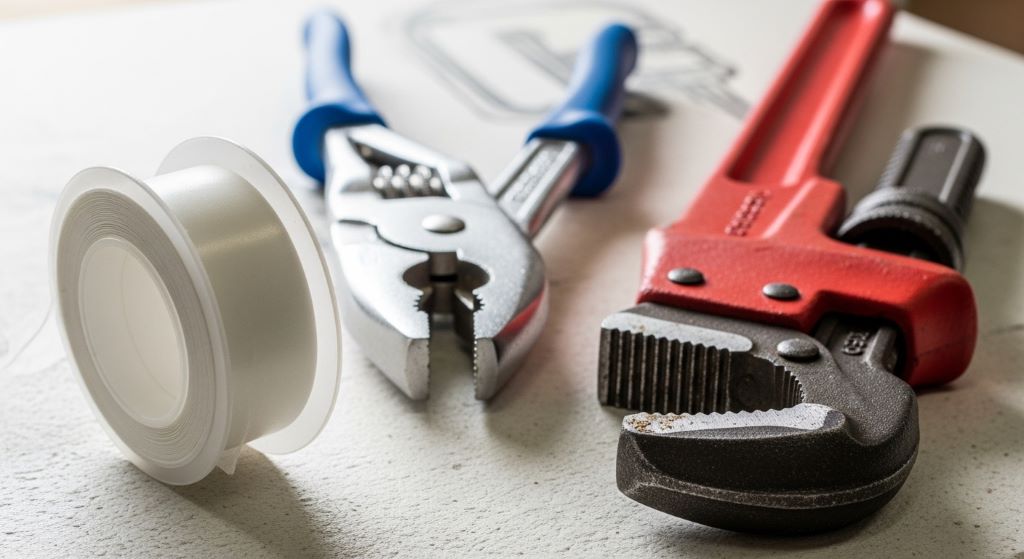
A pipe wrench is essential for gripping and turning pipes and fittings. Most homeowners need at least two sizes. A 10-inch wrench handles smaller jobs. A 14-inch or 18-inch wrench gives you more leverage for larger pipes.
Always use two wrenches when working on pipes. One holds the pipe steady while the other turns the fitting. This prevents damage to your plumbing system.
Adjustable Wrench
An adjustable wrench is different from a pipe wrench. It has smooth jaws, which makes it ideal for nuts, bolts, and chrome-plated fixtures. Using a pipe wrench on these surfaces can cause scratching and damage. Therefore, keep both types in your collection.
Basin Wrench
A basin wrench has a long handle with a pivoting jaw at the end. It is specifically designed to reach into tight spaces beneath sinks. If you have ever tried to tighten a faucet nut in a cramped cabinet, you know how frustrating it can be without this tool. A basin wrench makes the job simple and quick.
Cutting and Measuring Tools
Once you move beyond basic tightening and loosening, you will need tools for cutting and measuring.
Hacksaw
A hacksaw cuts through metal pipes, bolts, and screws. It is a versatile tool that belongs in every homeowner’s collection. Make sure you keep extra blades on hand. Blades become dull over time, especially when cutting harder materials.
Pipe Cutter
A pipe cutter gives you a cleaner, more precise cut than a hacksaw. It clamps around the pipe and rotates to create a smooth, even edge. This is especially useful when working with copper or plastic pipes. A clean cut ensures a better seal when you connect new fittings.
Tape Measure
A tape measure helps you plan repairs and purchase the right lengths of pipe. Many plumbing mistakes come from guessing instead of measuring. Always measure twice before cutting. This simple habit will save you a lot of wasted material and extra trips to the hardware store.
Sealing and Connection Tools
Proper sealing is critical in plumbing. Leaks at joints and connections are a common cause of water damage. Fortunately, you can prevent most of them with the right supplies and tools.
Thread Seal Tape
Thread seal tape, often called Teflon tape, wraps around the threads of pipe fittings. It fills small gaps and creates a watertight seal. It is inexpensive, easy to use, and one of the most important supplies in your toolkit. Wrap the tape clockwise around the threads two or three times before connecting fittings.
Plumber’s Putty
Plumber’s putty creates a watertight seal around drains and faucet bases. It stays soft and flexible, which makes it easy to apply and remove later. However, avoid using it on plastic or certain stone surfaces, as it can cause staining or damage. Always read the label before applying it.
Pipe Joint Compound
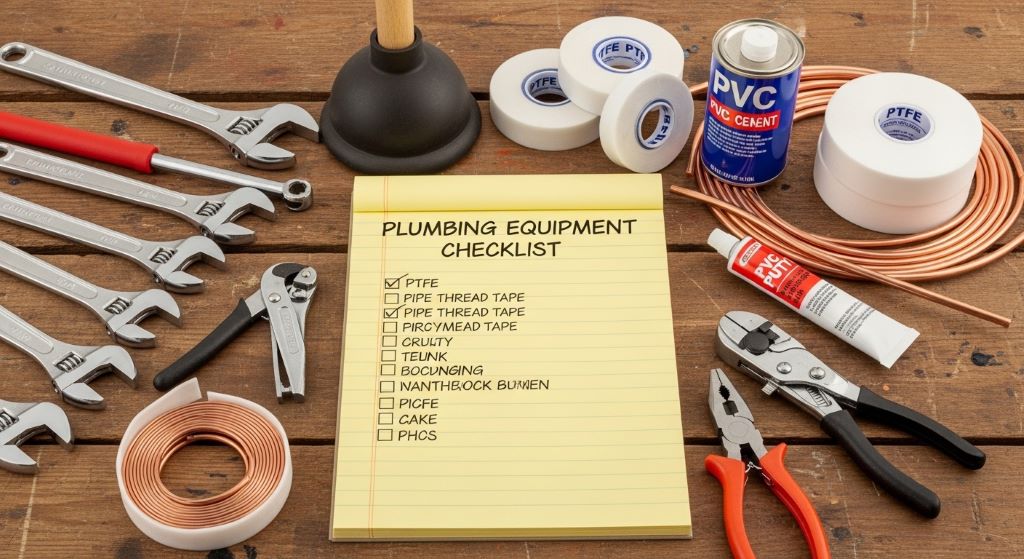
Also called pipe dope, this compound is applied to threaded connections. It is thicker than thread seal tape and works especially well on larger fittings. Some plumbers use both tape and compound together for extra protection. It is a small addition to your plumbing equipment checklist but one that makes a real difference.
Drain Cleaning Tools
Clogged drains are one of the most common household plumbing problems. A few key tools will help you clear most blockages quickly.
Hand Auger (Drain Snake)
A hand auger is a flexible cable with a corkscrew tip. You feed it into the drain and rotate it to break apart or pull out clogs. It reaches much deeper than a plunger and works well on tougher blockages. This tool is useful in sinks, tubs, and shower drains.
Toilet Auger
A toilet auger is similar to a hand auger but designed specifically for toilets. It has a longer cable and a protective sleeve that keeps the bowl from getting scratched. Never use a regular drain snake in a toilet. You risk damaging the porcelain or pushing the clog further down.
Drain Cleaning Brush
A drain cleaning brush has stiff bristles and a flexible handle. It is ideal for cleaning hair and soap buildup from shower and tub drains. Regular use of this brush can prevent clogs from forming in the first place. Additionally, it is inexpensive and easy to replace.
Inspection and Detection Tools
Sometimes the problem is not obvious. Leaks can hide behind walls, under floors, or deep in pipe connections. A few detection tools can help you find issues before they become major repairs.
Flashlight or Headlamp
Good lighting is essential when working in dark spaces under sinks, inside cabinets, or beneath the house. A hands-free headlamp is especially useful because it lets you work with both hands free. LED models are bright, energy-efficient, and last a long time.
Moisture Meter
A moisture meter detects water hidden inside walls or under floors. It is a helpful tool for spotting slow leaks that are not yet visible to the naked eye. Catching a hidden leak early can prevent mold, structural damage, and expensive repairs down the road.
Plumber’s Camera (Optional)
A small inspection camera can be fed into a pipe to see what is happening inside. This tool is more of a professional-grade addition, but affordable consumer models are now available. If you frequently deal with drain clogs or unexplained backups, a camera can save a lot of guesswork.
Safety Gear and Supporting Supplies
No plumbing tool guide is complete without mentioning safety. Plumbing work can involve sharp edges, chemicals, and contaminated water. Protecting yourself is just as important as having the right tools.
Rubber Gloves
Thick rubber gloves protect your hands from drain cleaners, sewage, and sharp pipe edges. Keep a few pairs in different sizes. Disposable gloves work fine for light tasks, but heavy-duty reusable gloves are better for bigger jobs.
Safety Glasses
Water and debris can splash unexpectedly when working on pipes. Safety glasses protect your eyes from splashes, rust flakes, and other particles. They are lightweight, inexpensive, and easy to keep in your tool bag.
Bucket and Towels
Always have a bucket nearby when working on pipes. Water will spill. It always does. Towels and an old bucket can save your floors and cabinets from water damage during a repair.
Plumber’s Tape and Repair Clamps
Plumber’s tape and repair clamps are temporary fixes for small pipe leaks. They are not permanent solutions, but they give you time to plan a proper repair. Keep a few of these in your toolkit for emergencies.
Organizing Your Plumbing Toolkit
Having all the right tools means nothing if you cannot find them when you need them. Organization is a key part of using this tool guide effectively.
Use a dedicated toolbox or bag just for plumbing supplies. Label it clearly. Store your thread seal tape, putty, and other small supplies in a zipper bag inside the box. This keeps everything together and easy to grab in a hurry.
Review your toolkit twice a year. Replace worn items, restock supplies, and check that everything is in working order. A quick five-minute review can save you from scrambling during an emergency.
Conclusion
Building a complete plumbing tools list does not have to be overwhelming. Start with the essentials: a plunger, pipe wrenches, a hand auger, and sealing supplies. From there, add cutting tools, inspection equipment, and safety gear as your confidence grows.
A solid plumbing equipment checklist puts you in control of your home. You can handle small repairs yourself, respond quickly to emergencies, and avoid costly service calls for simple jobs. Additionally, taking care of your plumbing system through regular maintenance keeps problems from developing in the first place.
The key is to start building your collection now, not when something breaks. Use this guide as your starting point, and you will be well prepared for whatever your home’s plumbing throws at you.
Frequently Asked Questions
What is the most important plumbing tool for a homeowner to own first?
A plunger is the single most useful plumbing tool for a homeowner. It handles the most common problem — clogged drains and toilets — quickly and without chemicals. Start here before anything else.
Do I need both a cup plunger and a flange plunger?
Yes, both are helpful. A cup plunger works best on flat surfaces like sinks. A flange plunger has an extra rubber flap designed to fit the curved opening of a toilet bowl. Using the right one makes the job much easier.
Is thread seal tape the same as plumber’s putty?
No, they serve different purposes. Thread seal tape wraps around threaded pipe fittings to create a watertight seal at connections. Plumber’s putty is a soft compound used around drains and faucet bases. Both are useful, but they are not interchangeable.
How do I know if I need a hand auger or a toilet auger?
Use a hand auger for sink, tub, and shower drains. Use a toilet auger specifically for toilet clogs. Toilet augers have a protective sleeve that prevents scratching the porcelain bowl. Using the wrong one can cause damage or be ineffective.
How often should I update or replace tools in my plumbing kit?
Check your kit every six months. Replace items that show wear, rust, or damage. Restock consumables like thread seal tape, plumber’s putty, and gloves regularly. Well-maintained tools last longer and perform better when you need them most.
Related Topics:
How to Deep Clean Your Mattress with the Best Vacuum Cleaner
How to Pick the Best 18V Jigsaw for Home and Workshop Use