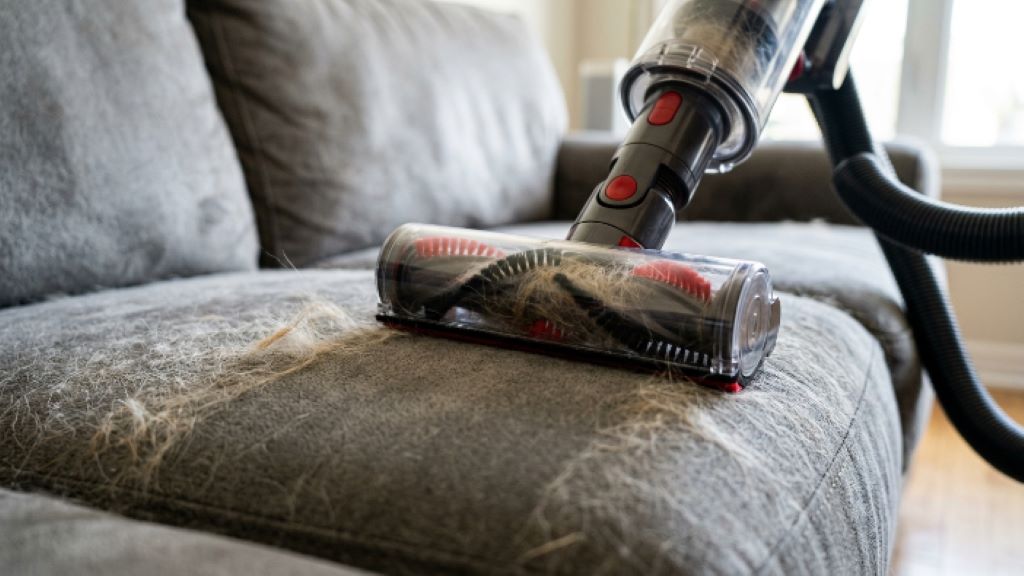

If you own a pet, you already know the struggle. Hair gets everywhere. Your clothes, your floors, and most of all, your couch. It weaves itself deep into fabric fibers and clings stubbornly no matter how many times you brush it away. However, the right vacuum can change everything.
This guide will show you exactly how to remove pet hair from your couch using a vacuum. You will also learn which features to look for in a vacuum, which attachments work best, and how to keep your sofa cleaner for longer. Additionally, we will cover simple habits that make the whole process much easier over time.
Why Pet Hair Is So Hard to Remove from Couches
Pet hair does not just sit on top of fabric. It embeds itself into the weave. The natural texture of upholstery grabs and holds individual strands. Static electricity makes it worse by pulling hair deeper into the surface.
Additionally, certain fabrics are much more prone to trapping hair. Velvet, microfiber, and woven textures tend to hold hair more tightly than leather or tightly woven cotton. Therefore, knowing your couch fabric is the first step toward choosing the right cleaning method.
Regular vacuums are often not enough. Their suction may be powerful, but without the right tools and technique, much of the hair simply moves around rather than being picked up. This is why a targeted approach makes such a big difference.
Choosing the Right Vacuum for Pet Hair Removal
Not every vacuum is built for pet hair. When shopping specifically for pet hair removal, certain features will serve you far better than others.
Strong and Consistent Suction
Suction power is the most important factor. You need a vacuum that maintains strong suction even as the dustbin fills up. Some models lose power noticeably when half full. Look for vacuums that advertise consistent suction throughout the cleaning cycle.
Motorized Brush Attachments
A motorized upholstery tool is a game changer. Unlike a standard brush head, it has spinning bristles that agitate fabric fibers and lift embedded hair to the surface. This is especially useful for deep-pile fabrics and heavily used sofas.
However, not all motorized attachments are the same. Some are designed for hard floors and will damage upholstery. Always look for an attachment specifically labeled for fabric or upholstery use.
HEPA Filtration
Pet hair often comes with dander, which is the real trigger for allergies. A vacuum with HEPA filtration captures microscopic particles rather than releasing them back into the air. Therefore, if anyone in your home has allergies, this feature is essential.
Handheld or Cordless Design
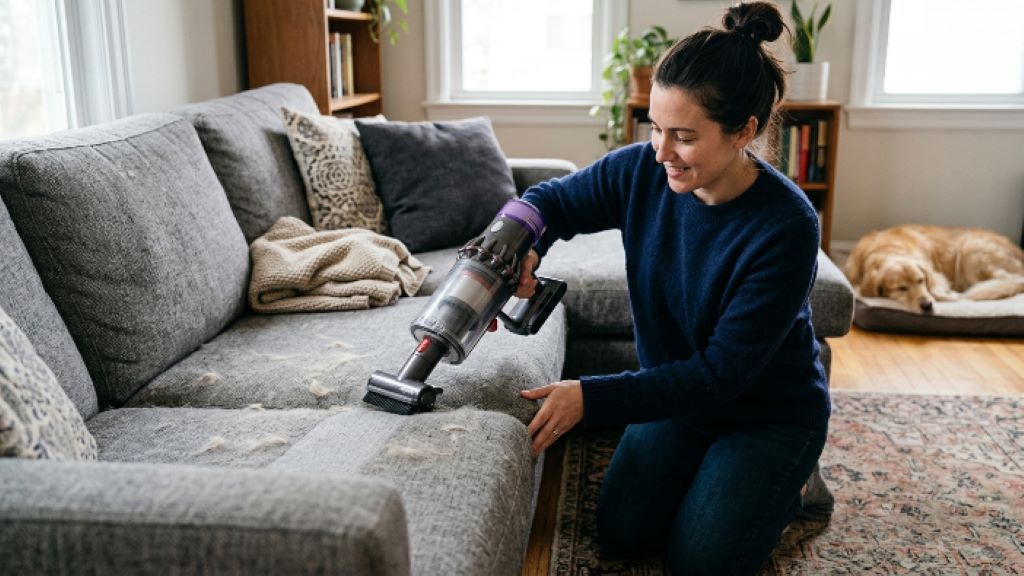
For couches specifically, a handheld or cordless vacuum offers much more flexibility. You can maneuver it easily into cushion corners, along armrests, and under pillows. A full-size upright vacuum is harder to use for detailed upholstery work.
Step-by-Step Guide to Vacuuming Pet Hair from Your Couch
Once you have the right vacuum, technique matters. Follow these steps for the best results.
Step 1: Loosen the Hair First
Before vacuuming, loosen the hair from the fabric. Use a rubber glove, a damp sponge, or a lint roller. Simply run it over the surface in one direction. This brings deeply embedded strands to the surface and makes vacuuming far more effective.
Step 2: Remove All Cushions
Take off all removable cushions and vacuum each side separately. Hair collects heavily in the seams and base of the couch where cushions sit. Do not skip these hidden areas. They are often the worst spots.
Step 3: Use the Upholstery Attachment
Attach the motorized upholstery tool to your vacuum. Work in short, overlapping strokes across the fabric. Move in one consistent direction rather than back and forth randomly. This prevents hair from simply being pushed around.
Additionally, pay close attention to the corners of each cushion and the backrest edges. These areas trap the most hair because pets tend to press against them.
Step 4: Use the Crevice Tool
Switch to the narrow crevice tool for tight seams, the gap between the backrest and seat, and around any decorative piping or zippers. This narrow attachment focuses suction into spots where the broader head cannot reach.
Step 5: Finish with a Final Pass
Do one final pass over the entire couch with the upholstery head. By now, any loosened hair that was missed on the first pass will be pulled up easily. Therefore, this last step ensures a thorough clean.
Protecting Your Fabric During the Cleaning Process
Vacuuming is generally safe for most upholstery. However, fabric care is something every pet owner needs to think about. Aggressive or improper cleaning can wear down fabric texture over time.
Always check your couch manufacturer guidelines before cleaning. Many sofas come with a cleaning code tag. W means water-based cleaners are safe. S means solvent-based only. X means vacuuming only. Following these codes protects the fabric and your warranty.
Additionally, avoid using high-heat attachments or steam on fabric that is not rated for it. This can cause shrinkage, fading, or permanent texture damage. When in doubt, stick to gentle suction and soft bristle tools.
Proper fabric care also means not over-vacuuming delicate materials. Velvet, for example, can develop shading or matting if brushed too aggressively. Use low suction settings on these types of sofas.
Top Vacuum Features Specifically Designed for Pet Owners
Several vacuums on the market are specifically designed with pet owners in mind. Here is what sets them apart:
- Anti-tangle brush rolls that prevent hair from wrapping around the motor head.
- Larger dustbin capacities to handle the high volume of hair picked up in a single session.
- Odor-neutralizing filters that absorb pet smells rather than circulating them.
- Multiple suction settings so you can adjust power based on the fabric type.
- Flexible hose reach for accessing tight corners without moving the main unit.
Brands like Dyson, Shark, Bissell, and Miele all offer models with dedicated pet hair tools. However, premium brands are not the only option. Several mid-range vacuums perform just as well for couch cleaning at a fraction of the cost.
Habits That Keep Your Couch Cleaner Between Vacuuming Sessions
Prevention is easier than cleaning. A few consistent habits can significantly reduce how much hair builds up on your couch.
Use a washable couch cover or throw blanket in the spots where your pet likes to sit. Wash it weekly. This single habit alone can cut your cleaning time in half.
Brush your pet regularly, especially during shedding seasons. The more hair you remove at the source, the less ends up on your furniture. Additionally, a well-groomed coat sheds less overall.
Keep a lint roller near the couch for quick daily touch-ups. A two-minute daily roll is much easier than a thirty-minute deep clean once a week.
Finally, vacuum your couch at least once a week. Hair that sits for longer periods becomes more deeply embedded. Therefore, regular short sessions are more effective than occasional long ones.
Conclusion
Removing pet hair from your couch does not have to be a battle. With the right vacuum, the right attachments, and the right technique, it becomes a quick and manageable task.
Start by loosening hair before vacuuming. Use a motorized upholstery attachment for the main surfaces. Switch to the crevice tool for seams and corners. Always follow your couch manufacturer guidelines to protect fabric care and keep your sofa looking its best.
Additionally, small daily habits make a big difference over time. A combination of regular brushing, couch covers, and weekly vacuuming keeps your living space fresh and comfortable for everyone in the household, including your pet.
Frequently Asked Questions
1. What type of vacuum is best for removing pet hair from a couch?
A handheld or cordless vacuum with a motorized upholstery attachment works best. It offers flexibility and focused suction for fabric surfaces. Models with HEPA filters are ideal if anyone in your home suffers from pet allergies.
2. How often should I vacuum my couch to control pet hair?
Vacuuming once a week is ideal for most pet owners. However, if your pet sheds heavily or spends a lot of time on the couch, vacuuming two to three times a week will keep hair from embedding deeply into the fabric.
3. Can vacuuming damage my couch fabric?
Vacuuming is generally safe when done correctly. Always use the appropriate attachment for upholstery. Avoid high suction on delicate fabrics like velvet. Check the cleaning code on your sofa tag before using any tools or cleaners to ensure proper fabric care.
4. What should I do before vacuuming to make pet hair removal easier?
Run a rubber glove, damp sponge, or lint roller over the surface first. This loosens deeply embedded hair and brings it to the top layer of the fabric. Vacuuming after this step picks up far more hair than going in cold.
5. Are there vacuum brands specifically recommended for pet owners?
Yes. Dyson, Shark, Bissell, and Miele all produce vacuums with dedicated pet tools. Bissell in particular donates to pet welfare organizations with certain purchases. However, many mid-range models also perform well for couch cleaning. Focus on suction power, upholstery attachments, and filtration rather than brand alone.
Related Topics:
How to Create a Complete Plumbing Tools List for Homeowners
How to Fix a Loose Stair Railing (Home Safety)