How to Fix a Loose Stair Railing Safely is one of the most important home safety repairs a homeowner can learn. A stair railing is designed to provide stability and support when moving up or down stairs. When it becomes loose, it significantly increases the risk of falls, especially for children, elderly family members, and guests.
According to the U.S. Centers for Disease Control and Prevention (CDC), more than 1 million people are injured each year in stair-related accidents. Many of these incidents happen because railings are unstable or improperly secured. The good news is that most loose stair railings can be fixed quickly using simple tools and proper techniques.
This guide explains how to fix a loose stair railing safely using proven methods used by professional contractors. You will learn how to diagnose the cause, choose the right repair method, and secure the railing so it meets basic home safety standards. Whether your railing is loose at the wall bracket, the newel post, or the balusters, the steps below will help you restore stability and prevent accidents.
Why Is a Loose Stair Railing Dangerous?
Short answer: A loose stair railing increases the risk of falls because it cannot support body weight during a slip or imbalance.
Stair railings are designed to provide structural support. When they loosen, the entire staircase becomes unsafe.
Research from the American Journal of Preventive Medicine found that stairways contribute to over 12% of household injury incidents. Lack of proper handrail support was a common contributing factor.
A loose railing can lead to several problems:
- Loss of balance while climbing stairs
- Sudden railing movement during support
- Structural damage to the wall or staircase
- Increased risk for elderly residents
- Safety hazards for children
Home inspectors often flag loose stair railings during property inspections because building safety codes require railings to support a minimum amount of weight.
In most homes, stair railings should withstand approximately 200 pounds of force. If the railing moves when pulled, it likely fails this standard.
Fixing the problem quickly helps prevent accidents and protects your home’s structural safety.
What Causes a Stair Railing to Become Loose?
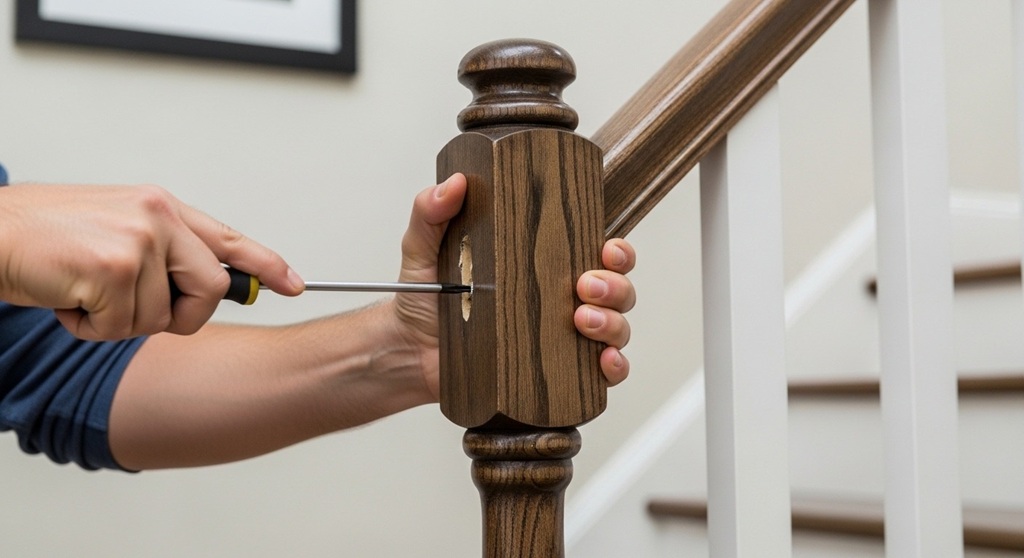
Short answer: Stair railings usually loosen due to worn screws, loose brackets, wood expansion, or structural movement over time.
Several factors can cause a railing to loosen gradually.
1. Loose Mounting Screws
The most common cause is screws pulling out of the wall studs or stair posts. Over time, repeated pressure weakens the connection.
2. Wall Anchor Failure
If screws were installed into drywall instead of studs, they may loosen after months of use.
3. Worn Brackets
Metal brackets holding the railing can bend or loosen due to repeated stress.
4. Wood Shrinking or Expansion
Humidity changes cause wood railings to expand and contract, which gradually loosens connections.
5. Structural Stair Movement
In older homes, stair structures may shift slightly over time.
| Cause | Common Symptoms |
|---|---|
| Loose screws | Railing wiggles near brackets |
| Weak wall anchors | Bracket pulls away from wall |
| Loose newel post | Entire railing moves |
| Damaged brackets | Metal bracket flexes |
| Wood movement | Small gaps appear in joints |
Identifying the exact cause helps determine the safest repair method.
What Tools Are Needed to Fix a Loose Stair Railing?
Short answer: Most stair railing repairs require basic tools such as a drill, screwdriver, wood screws, wall anchors, and a stud finder.
Before starting the repair, gather the necessary tools.
- Power drill
- Screwdriver set
- Wood screws (2–3 inch)
- Stud finder
- Level
- Wood glue
- Replacement brackets (if needed)
- Wall anchors
- Wrench
Using the correct screw length is important. Professionals typically recommend 2.5 to 3 inch screws to ensure proper grip into wall studs.
A stud finder is also critical because attaching railing brackets directly into studs increases stability significantly.
How to Fix a Loose Stair Railing Safely (Step-by-Step Guide)
Short answer: To fix a loose stair railing safely, tighten brackets, anchor screws into wall studs, reinforce the railing connection, and test the railing for stability.
Step 1: Inspect the Railing Carefully
Start by checking where the railing is loose.
- Wall brackets
- Newel post connection
- Balusters
- Handrail joints
Gently shake the railing to identify the exact weak point.
Step 2: Tighten Existing Screws
Use a screwdriver or drill to tighten any visible loose screws.
Sometimes this simple step solves the problem if the screws have only slightly loosened.
Step 3: Locate Wall Studs
If the railing bracket attaches to drywall, reinforcement is necessary.
Use a stud finder to locate the wall studs behind the drywall.
Mark the location before reinstalling screws.
Step 4: Replace Weak Screws
Remove existing screws and replace them with longer wood screws.
This helps secure the bracket directly into the stud.
Contractors often recommend #10 wood screws for stair railings because they offer strong holding power.
Step 5: Reinforce the Brackets
If the bracket itself is loose:
- Remove the bracket
- Check for wall damage
- Fill stripped holes with wood filler or anchors
- Reinstall the bracket securely
Make sure the bracket sits flush against the wall.
Step 6: Repair a Loose Newel Post
If the large post at the end of the railing moves, additional reinforcement may be needed.
Possible fixes include:
- Lag screws
- Hidden post anchors
- Structural wood screws
This repair provides stability for the entire stair railing system.
Step 7: Test the Railing
Once repairs are complete, test the railing by applying firm pressure.
The railing should feel solid and should not move more than a few millimeters.
If it still shifts, additional reinforcement may be required.
What Is the Safest Way to Secure a Stair Railing to the Wall?
Short answer: The safest method is attaching the railing brackets directly into wall studs using long structural screws.
Drywall anchors alone are rarely strong enough for stair railings.
Professional builders typically follow these steps:
- Locate wall studs
- Pre-drill pilot holes
- Install heavy-duty screws
- Secure metal brackets
According to residential building standards, handrails should be mounted 34 to 38 inches above the stair tread.
This height ensures proper ergonomics and safety during use.
How Can You Prevent Stair Railings from Becoming Loose Again?
Short answer: Regular inspections, proper installation into studs, and quality hardware help prevent railing loosening.
Homeowners can extend the life of stair railings with simple maintenance practices.
- Inspect railings every six months
- Tighten screws regularly
- Avoid leaning excessive weight on railings
- Replace worn brackets immediately
- Use structural screws for repairs
Moisture control also helps protect wooden stair components from expansion damage.
When Should You Call a Professional?
Short answer: If the stair railing is connected to structural posts, concrete walls, or severely damaged wood, professional repair is recommended.
Some staircases require specialized repairs.
Situations where professionals should handle the repair include:
- Major staircase structural damage
- Loose newel posts embedded in concrete
- Broken stair treads
- Metal staircase systems
Professional contractors can also ensure the repair meets local building codes.
Conclusion: Why Fixing a Loose Stair Railing Matters for Home Safety
A loose stair railing might seem like a small problem, but it can quickly turn into a serious safety risk. With millions of stair-related injuries occurring every year, ensuring that railings remain secure is an important part of home maintenance.
The good news is that most railing problems can be solved with simple tools and the right repair steps. Tightening screws, securing brackets into wall studs, and reinforcing weak connections can restore stability and protect everyone using the stairs.
Regular inspections also help catch problems early before they become hazardous.
If you notice your railing starting to move, take action immediately. A quick repair today can prevent a dangerous fall tomorrow.
Take a few minutes today to inspect your stair railings and make sure your home remains a safe environment for your family.
Frequently Asked Questions (FAQs)
How do I know if my stair railing is unsafe?
A stair railing is unsafe if it moves when pressure is applied. A properly installed railing should feel firm and stable without noticeable movement.
Can I fix a loose stair railing without replacing it?
Yes. Most loose railings can be repaired by tightening screws, installing longer screws into wall studs, or replacing damaged brackets.
What screws are best for stair railing repair?
Structural wood screws between 2.5 and 3 inches long are commonly recommended for securing stair railing brackets into wall studs.
Are drywall anchors strong enough for stair railings?
Drywall anchors alone are usually not strong enough. Stair railings should ideally be secured into wall studs for maximum strength and safety.
How often should stair railings be inspected?
Experts recommend inspecting stair railings at least every six months to ensure all brackets and screws remain secure.
What height should a stair railing be?
Most residential building codes recommend a handrail height between 34 and 38 inches above the stair tread.
Can a loose railing fail a home inspection?
Yes. Home inspectors often mark loose stair railings as a safety issue that must be repaired before property sale approval.
Read More Also: Where to Find the Best King Bedroom Sets Clearance Deals
Find out: How to Pick the Best Climbing Rope for Safety and Performance in 2026