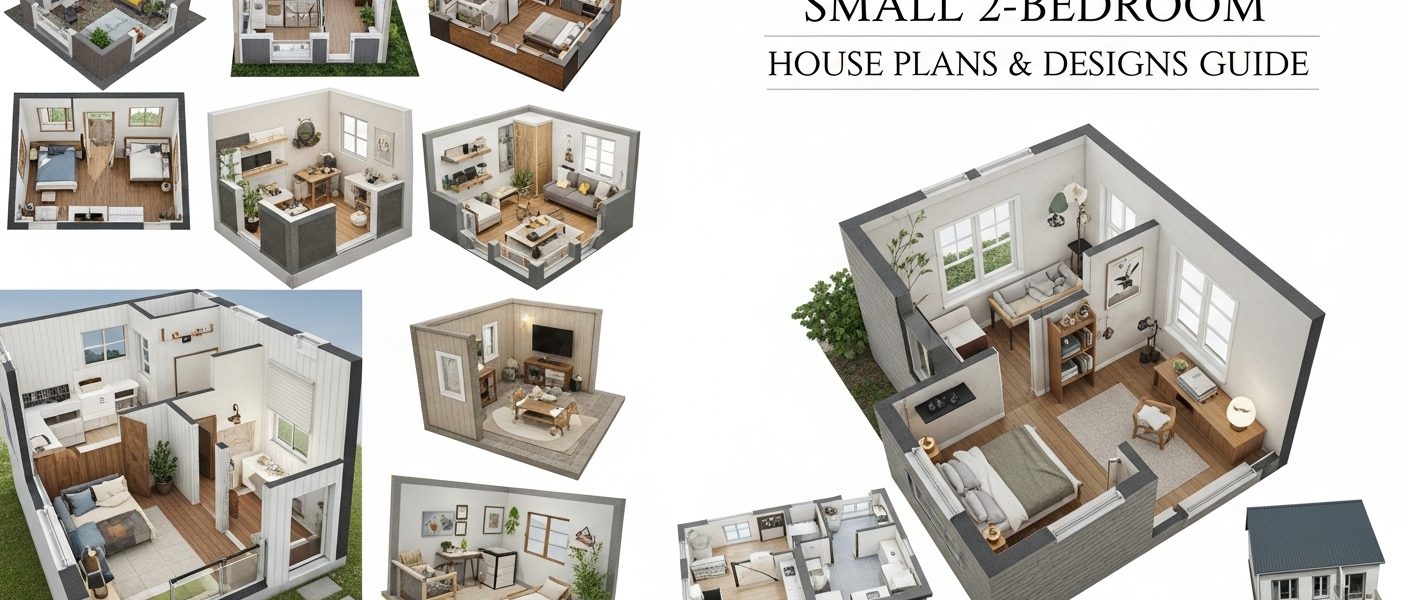

Building a compact two-bedroom home is one of the smartest ways to balance affordability, comfort, and flexibility. Many families, couples, and remote workers now prefer smaller homes because they cost less to build, maintain, and furnish while still supporting modern lifestyles.
The challenge is choosing the right layout. A poorly planned small house feels cramped. A well-designed one feels efficient, open, and comfortable.
This guide explains how to choose the best small 2 bedroom house plans and designs, which layouts work best for different families, how much space you actually need, and what features increase long-term value.
What makes small 2 bedroom house plans practical and efficient?
Snippet Answer: Small 2 bedroom house plans are practical when they prioritize open layouts, shared living zones, compact circulation space, natural lighting, and multi-purpose rooms. Efficient plans reduce wasted hallway area, improve airflow, lower construction costs, and maximize usable square footage while maintaining privacy between bedrooms.
Answer Block: Practical small 2 bedroom house plans minimize unused space and maximize function. Open living areas, shared utility walls, smart storage zones, and compact hallways improve efficiency. Bedrooms stay private while common areas remain flexible, making the layout suitable for families, couples, guests, or rental purposes.
Efficiency starts with circulation planning. Hallways should occupy less than 10% of total floor area. Every unnecessary corridor increases construction cost without improving usability.
Open-plan living rooms connected with kitchens create visual space without increasing square footage. This layout reduces structural walls and improves natural light distribution.
Bedroom placement matters equally. The best plans position bedrooms on opposite sides of the house or separated by shared spaces. This improves privacy and sound control.
Bathrooms should connect to plumbing cores. Keeping kitchens and bathrooms close reduces pipe runs and installation cost.
Efficient layouts also include:
- Built-in storage instead of standalone wardrobes
- Combined dining and living areas
- Compact utility corners
- Shared wet-wall plumbing systems
These features make small homes feel larger while lowering total construction expenses.
What is the ideal size for a small 2 bedroom house?
Answer Block: The ideal size for a small 2 bedroom house ranges between 600 and 1,000 square feet. Homes under 700 square feet suit couples or rentals, while 800–1,000 square feet comfortably support small families with improved storage, circulation space, and flexible living areas.
Choosing the right size depends on lifestyle rather than trends. Many homeowners assume larger is better, but compact homes reduce long-term expenses.
A 600–700 sq ft layout usually includes:
- Two compact bedrooms
- One shared bathroom
- Open living and kitchen zone
- Minimal hallway space
An 800–900 sq ft house improves comfort significantly. It allows wider bedrooms, dedicated dining space, and extra storage.
Homes approaching 1,000 sq ft support:
- Two bathrooms
- Utility laundry area
- Separate entry foyer
- Larger kitchen workspace
Choosing the correct size early prevents redesign costs later. Always calculate furniture placement before finalizing dimensions.
Which layout types work best for small 2 bedroom houses?
::contentReference[oaicite:1]{index=1}
Answer Block: The most effective small 2 bedroom house layouts include open-plan rectangle layouts, split-bedroom designs, L-shaped footprints, and compact corridor-free plans. These layouts maximize usable area, improve privacy, enhance airflow, and reduce construction complexity for budget-friendly housing projects.
Rectangle layouts remain the most economical option. Straight walls reduce structural complexity and simplify roofing systems.
Split-bedroom layouts place bedrooms on opposite sides of the living area. This works well for families with children or homeowners renting one room.
L-shaped layouts improve zoning. They naturally separate public and private spaces while creating outdoor courtyard opportunities.
Corridor-free layouts eliminate unnecessary walking paths. Instead, spaces connect directly through shared living areas.
The best layout depends on plot shape. Narrow plots benefit from linear designs. Corner plots support L-shaped houses.
When evaluating layouts, consider:
- Ventilation direction
- Sunlight exposure
- Furniture clearance space
- Future expansion possibility
Layout efficiency determines long-term usability more than total size.
How can small 2 bedroom houses feel bigger inside?
::contentReference[oaicite:2]{index=2}
Answer Block: Small 2 bedroom houses feel larger when designers use open layouts, large windows, vertical storage, light color palettes, and minimal partitions. Strategic furniture placement and multifunctional spaces increase perceived space without increasing construction size or cost.
Visual space matters as much as physical space. Removing unnecessary walls creates longer sightlines across the house.
Natural light improves perceived room size instantly. Windows placed opposite each other improve airflow and brightness.
Vertical storage reduces floor clutter. Wall-mounted shelves replace bulky cabinets.
Sliding doors also improve usability. They remove swing clearance zones required by traditional doors.
Designers often use these techniques:
- Ceiling-height wardrobes
- Mirrored wall panels
- Foldable dining tables
- Under-bed storage drawers
Combining these features creates a spacious experience even in compact floor plans.
What construction materials are best for small 2 bedroom houses?
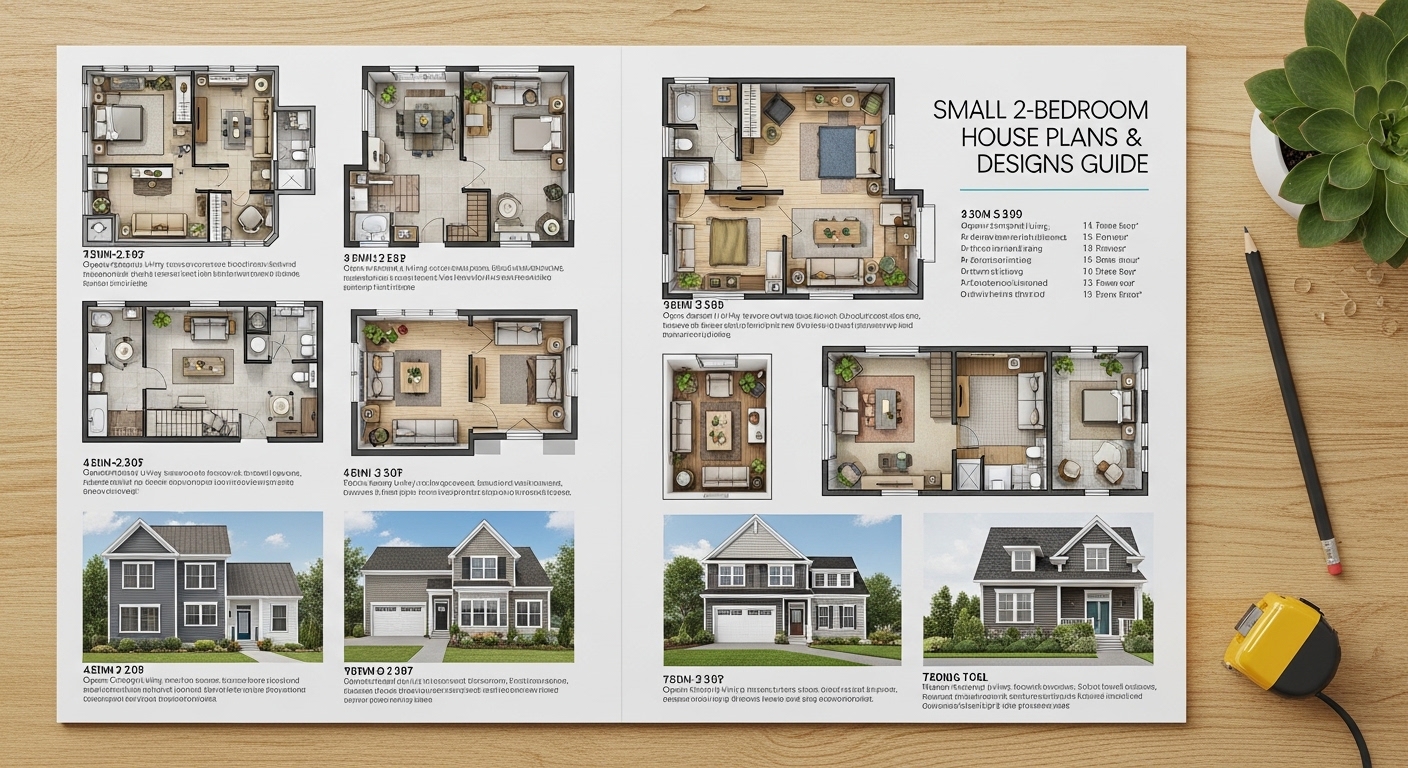
Answer Block: The best construction materials for small 2 bedroom houses include reinforced concrete frames, brick masonry walls, lightweight AAC blocks, steel roofing systems, and energy-efficient windows. These materials balance durability, affordability, insulation performance, and long-term maintenance requirements.
Material selection affects durability, thermal comfort, and budget. Choosing correctly prevents costly repairs later.
| Material | Cost Efficiency | Durability | Insulation Quality | Best Use |
|---|---|---|---|---|
| Brick Masonry | Medium | High | Moderate | External walls |
| AAC Blocks | High | High | Excellent | Energy-efficient walls |
| Concrete Frame | Medium | Very High | Moderate | Main structure |
| Steel Roofing | High | High | Moderate | Budget roofing |
AAC blocks reduce wall thickness while improving insulation. This increases usable interior area.
Concrete frames support vertical expansion. That makes them ideal for future second-floor additions.
Steel roofing works well for fast construction timelines.
How much does it cost to build a small 2 bedroom house?
Answer Block: Building a small 2 bedroom house typically costs between $15,000 and $60,000 depending on location, materials, labor rates, and finishes. Compact layouts reduce foundation, roofing, and structural expenses, making them significantly cheaper than larger residential designs.
Construction costs vary widely across regions. However, compact houses always reduce total investment.
Major cost components include:
- Foundation and structure (35%)
- Walls and plaster (20%)
- Roofing (15%)
- Electrical and plumbing (15%)
- Finishing and interiors (15%)
Simple rectangular layouts lower roofing costs dramatically.
Shared plumbing walls reduce pipe length and installation complexity.
Compact homes also reduce lifetime maintenance costs.
What features increase resale value in small 2 bedroom houses?
Answer Block: Small 2 bedroom houses gain higher resale value when they include flexible layouts, modern kitchens, natural lighting, storage solutions, energy-efficient windows, and expansion-ready structures. Buyers prefer homes that support future upgrades without major structural modifications.
Resale value depends more on functionality than size.
Flexible rooms increase property demand. A second bedroom can function as an office or rental space.
Energy-efficient windows reduce cooling costs. Buyers increasingly prioritize operating expenses.
Expansion-ready foundations allow second-floor construction later.
Exterior appearance also influences buyer perception. Simple modern elevations attract more attention than traditional complex facades.
Always design with future adaptability in mind.
Conclusion: How to choose the best small 2 bedroom house plan
Choosing the right small 2 bedroom house plan requires balancing space efficiency, layout flexibility, material selection, and future expansion possibilities. Compact homes succeed when every square foot serves a clear function.
Open-plan layouts improve usability. Split-bedroom designs improve privacy. Shared plumbing zones reduce construction costs. Large windows improve comfort and lighting.
Focus on long-term livability instead of short-term appearance. A well-planned 800–1,000 sq ft house can outperform poorly designed larger homes.
If you are planning construction, start by selecting a layout that matches your plot size, climate conditions, and family needs. Then optimize materials and storage solutions for efficiency.
The smartest small house designs are not smaller versions of large houses. They are intentionally planned systems that maximize comfort while minimizing cost.
FAQs about small 2 bedroom house plans and designs
Is a 2 bedroom house enough for a small family?
Yes. A properly planned 2 bedroom house comfortably supports couples with one or two children. Open living spaces and efficient storage improve usability without increasing total floor area.
What is the minimum width for a 2 bedroom house?
The minimum practical width is 16–20 feet. Narrower layouts reduce furniture flexibility and ventilation efficiency.
Can a small 2 bedroom house include two bathrooms?
Yes. Homes above 850 square feet often include two bathrooms by sharing plumbing walls and reducing hallway space.
Which roof type is best for small houses?
Flat roofs and simple gable roofs are the most cost-efficient. They reduce structural complexity and maintenance requirements.
Are small houses cheaper to maintain?
Yes. Smaller homes reduce electricity consumption, cleaning time, repair costs, and furniture expenses.
Can I expand a small 2 bedroom house later?
Yes. Reinforced concrete structures allow vertical expansion, while L-shaped layouts support horizontal extensions.
Do small homes have good resale demand?
Yes. Compact homes are popular among first-time buyers, retirees, and rental investors because of affordability and efficiency.
Read More Also: How to Choose the Right King Bedroom Set on Sale
Learn More: How to Renovate an Apartment on a Budget: What Does It Really Mean?