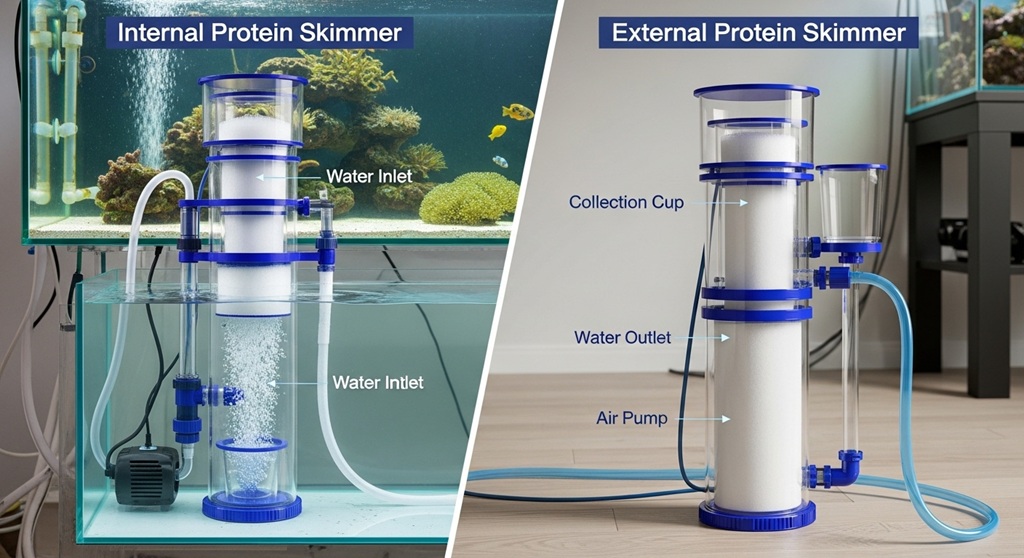

Choosing the right protein skimmer is crucial for a healthy aquarium. Whether you’re running a bustling reef or a peaceful fish-only tank, the debate of internal vs external protein skimmer often pops up. Internal skimmers sit inside your sump or tank, while external skimmers mount outside, saving space inside your aquarium. Each has distinct benefits and challenges. So, which is best for your setup? This comprehensive guide unpacks all you need to know to make the right choice, boost water quality, and keep your aquatic friends thriving.
What is the core difference between internal and external protein skimmers?
The main difference is location: internal protein skimmers are installed inside the aquarium or sump, while external skimmers are mounted outside and connect via plumbing.
Internal skimmers are submerged, drawing water directly from inside the sump or aquarium. External skimmers sit beside or below your tank. Water is pumped externally into the skimmer, processed, and then returned. This difference influences installation, space requirements, and maintenance. No single option is universally better; choosing between them depends on your aquarium’s design, space, and specific needs. Understanding these differences is the first step to finding your perfect fit.
Which is easier to install: internal or external protein skimmers?
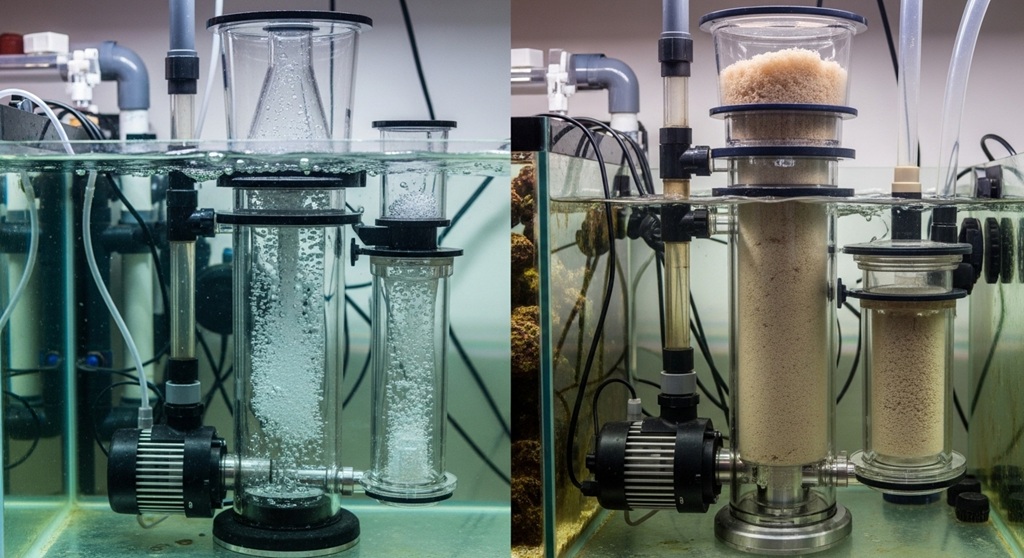
Internal protein skimmers are generally easier and faster to install because they don’t require extra plumbing or complex setup.
Most internal models simply drop into your sump or directly into the aquarium. You plug them in, adjust the settings, and they’re ready to use. They require minimal modifications and are ideal for beginners or anyone looking for a straightforward setup.
External skimmers, in contrast, need plumbing connections for both inlet and outlet. This can mean cutting hoses, fitting external pumps, or even drilling your sump. Installation is more involved and may require more tools and expertise. For many hobbyists, the easier installation of internal skimmers is a deciding factor.
Which protein skimmer is better for space-saving?
External protein skimmers are typically better for saving space within your aquarium or sump, as they are positioned outside the main water chamber.
By relocating the skimmer outside, you free up valuable space for other equipment or simply for better water flow inside your tank or sump. This matters in smaller setups where every inch counts. However, you’ll need available space outside the tank and easy access for maintenance, and sometimes, a dedicated area in your aquarium stand. Internal skimmers, while compact, do reduce internal working space inside your sump. The decision depends on where space is more available—inside the tank or outside it.
How do internal vs external protein skimmers compare in maintenance?
Internal protein skimmers tend to be easier to maintain, as they are more accessible, but external skimmers often allow for more thorough cleaning.
With an internal skimmer, you simply open your aquarium stand, lift the collection cup, and rinse or clean as needed. External models may need the disconnection of hoses or parts before cleaning. However, their external location can make it easier to perform a deep clean without risk of spilling detritus back into the sump or tank.
Below is a quick comparison to illustrate:
| Feature | Internal Skimmer | External Skimmer |
|---|---|---|
| Accessibility | High (inside sump/tank) | High (outside tank) |
| Cleaning Ease | Simpler, quicker | Allows deep cleaning |
| Spillage Risk | Possible inside tank/sump | Mess manageable outside tank |
| Disassembly Needed | Minimal | May require disconnecting |
Are there performance differences between internal and external protein skimmers?
Performance levels are similar for both types if skimmer size and quality are matched, but external skimmers can handle larger volumes and more advanced systems.
Most hobbyist tanks under 200 gallons see no major difference if the skimmer is appropriately sized and well-maintained. However, external skimmers are more common in large aquarium systems, fish stores, or commercial setups because they can be built bigger, handle higher flow rates, and accept more powerful pumps.
The essential point: performance is less about internal vs external and more about choosing the right model and sizing it properly for your tank load.
Which protein skimmer is safer against leaks and spills?
Internal skimmers are generally safer in terms of leak prevention, since any overflow stays inside the sump or tank.
With external skimmers, plumbing issues or overflows can lead to spills outside the aquarium, possibly damaging your stand or flooring. Internal skimmers, even in failure, simply return water to the system without external mess. However, a properly installed external skimmer with trusted plumbing and regular checks poses minimal risk. For aquarists concerned about spills or those with tanks above living areas, internal models offer greater peace of mind.
Which option is better for custom or advanced aquarium setups?
External protein skimmers are often the go-to for custom, advanced, or heavily stocked aquarium setups due to their flexibility and capacity.
External skimmers accommodate higher flow rates, larger pumps, and custom filtration designs—attributes needed for serious reef keepers or large tanks. They can be plumbed into complex sump systems or even connected to multiple tanks, making them very versatile. Internal skimmers, while effective, are somewhat constrained by the dimensions and water depth of your sump or display area. For highly customized builds, external skimmers present more options and scalability.
What’s the best choice: internal or external protein skimmer for small tanks?
An internal skimmer is almost always the best choice for small tanks, thanks to its compact design, easy setup, and lower cost.
Most nano and small marine aquariums are designed for internal skimmers. These are space-conscious, easy to maintain, and perfectly suited to the biological load of smaller tanks. External models are rare at this scale and often unnecessarily complicated. Unless your small system has unique requirements, stick with a quality internal protein skimmer for best results.
How do costs compare between internal and external protein skimmers?
Internal protein skimmers tend to be more budget-friendly, while external skimmers often cost more due to larger size and advanced plumbing needs.
Here’s a quick breakdown of cost considerations:
- Internal Skimmer: Lower purchase price, minimal accessory needs, lower installation cost.
- External Skimmer: Higher upfront cost, often needs external pumps and extra plumbing, more costly for large systems.
This makes internal skimmers ideal for hobbyists on a budget or those just starting their marine journey.
Summary Table: Internal vs External Protein Skimmer Comparison
| Feature | Internal Protein Skimmer | External Protein Skimmer |
|---|---|---|
| Installation | Simple, plug-and-play | Complex, requires plumbing |
| Space Required | Inside sump/aquarium | Outside tank or stand |
| Maintenance | Convenient, quick | More steps, but deeper cleaning |
| Risk of Leaks | Low | Moderate |
| Cost | Lower | Higher |
| Scalability | Limited by sump size | Easily scalable for large setups |
What should you consider before choosing between internal and external protein skimmers?
Evaluate your tank size, available space, budget, plumbing skills, and long-term goals before making a final decision.
- Tank Volume: Larger tanks may favor external skimmers.
- Available Space: Do you have more room inside the sump or outside?
- Maintenance Preferences: How much time and effort can you dedicate?
- Budget: Internal models are generally less expensive.
- Skill Level: Are you comfortable with plumbing and custom setups?
- Noise Tolerance: Internal skimmers are often quieter.
Carefully matching your choice to these factors guarantees a protein skimmer that serves you and your fish for years to come.
Conclusion: How Should You Decide Between Internal vs External Protein Skimmers?
Making the right choice between internal vs external protein skimmer boils down to your aquarium size, space availability, preferred maintenance routine, budget, and long-term plans. Internal skimmers offer simplicity, safety, and exceptional value—making them ideal for most hobbyists and smaller tanks. External skimmers shine in larger, complex, or commercial aquariums where space inside the sump is at a premium and advanced performance is needed.
For peace of mind and robust water quality, start with a quality internal skimmer for smaller systems. Upgrade to external as your aquarium ambitions grow. Ready to boost your aquarium’s health? Evaluate your setup today and choose the ideal protein skimmer for your aquatic world!
FAQ: Internal vs External Protein Skimmer
Can I use an external skimmer without a sump?
Yes. Some external skimmers can be plumbed directly to the aquarium, but this setup is less common for hobbyists. External models shine with sump systems, though specialized designs may allow standalone operation.
Is there a noise difference between internal and external protein skimmers?
Internal skimmers are usually quieter since they are submerged and the sump water helps dampen vibration and sound. External units can be noisier, especially if not well insulated or if the pump is undersized or poorly maintained.
Are external skimmers better for heavily stocked aquariums?
Yes. External skimmers often have larger bodies and more powerful pumps, making them ideal for high-bio-load and commercial tanks that demand robust waste removal.
Can an internal skimmer be used on any sump?
Not always. Internal skimmers require appropriate sump water depth and chamber size. Always check manufacturer requirements before purchasing to ensure compatibility with your sump.
Do internal protein skimmers affect display tank aesthetics?
If placed in a display tank, internal skimmers can detract from the natural look. Placing them in a sump hides them from view, preserving aesthetics and making maintenance easier.
What’s the most common protein skimmer type for beginners?
Internal skimmers, especially “in-sump” models, are the top choice for beginners due to their straightforward installation, maintenance, and cost-effectiveness.
How often should I clean my protein skimmer?
Clean the collection cup weekly and perform a full skimmer body clean monthly or as needed. Maintenance frequency may vary based on your tank’s bioload and the efficiency of your skimmer.
Read More Also: How to Choose the Right King Bedroom Set on Sale
Find out: How to Choose the Right Materials for your Drive