
Water appearing where the basement wall meets the floor often points to cove joint seepage rather than a cracked pipe or leaking appliance. That narrow seam becomes vulnerable when groundwater builds pressure beneath the slab or against the foundation wall. Effective basement leak repair starts by confirming how the moisture enters before selecting a drainage or sealing method.
Why Water Collects Along the Cove Joint
Groundwater can rise beneath a basement slab after heavy rain, rapid snowmelt, or long periods of saturated soil. Pressure then forces moisture through the small construction joint where the poured floor meets the foundation wall.
Because concrete remains naturally porous, the leak may appear as a thin wet line, damp patches, or shallow puddles around the room’s edge. Homeowners often search for basement leak repair near me after repeated cleanup fails to stop the water from returning during the next storm.
How Cove Joint Seepage Differs From a Wall Crack
Cove joint leaks usually follow the perimeter of the basement instead of tracing a single vertical or diagonal line. Water may spread along several feet of the wall-floor seam, making the entry point harder to identify by sight.
Wall cracks behave differently because they create a more direct pathway through the foundation. An inspector can compare staining patterns, moisture levels, weather history, and visible concrete damage to determine whether the basement leak comes through the joint, a crack, a pipe opening, or another weak point.
Why Surface Caulk Rarely Solves the Problem
Standard caulk may cover the visible seam, but it does not remove the water pressure pushing from behind or below the foundation. Trapped moisture can move to another opening, loosen the seal, or reappear several feet away.
Hydraulic cement and topical coatings face similar limits when active groundwater remains present. These products may help with minor gaps in the right setting, yet dependable basement leak repair usually requires a system that collects and redirects water rather than trying to hold it back indefinitely.
Interior Drainage Channels Control Water at the Perimeter
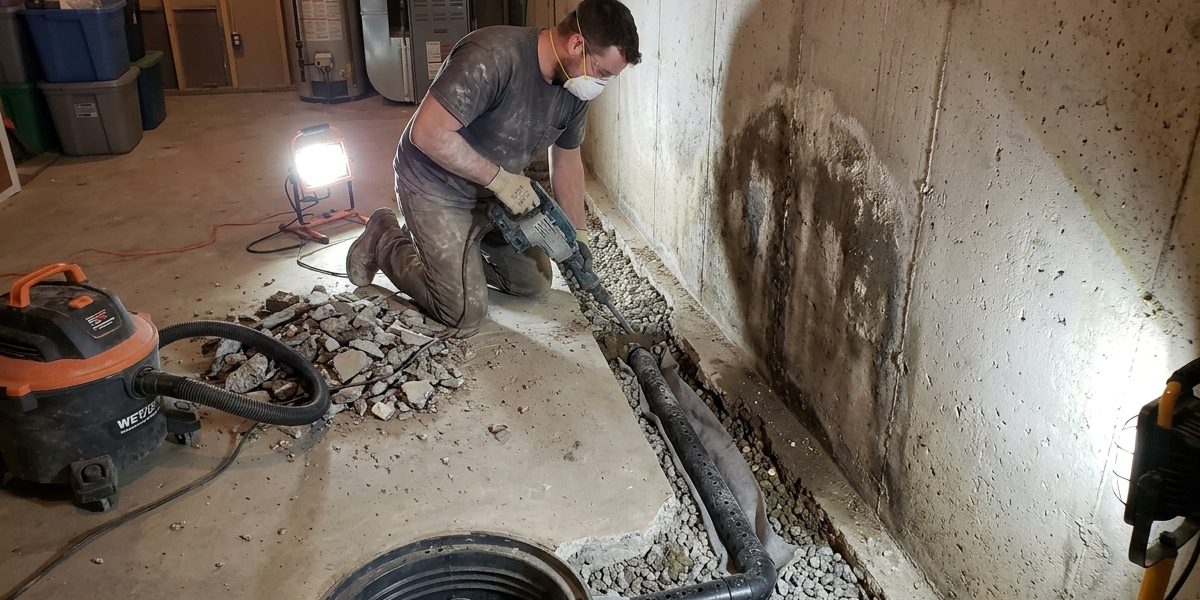
An interior drainage system creates a managed route for groundwater entering near the cove joint. Crews remove a narrow section of concrete along the basement perimeter, place perforated drainage pipe beside the footing, and surround it with washed stone.
Collected water flows toward a sump basin instead of spreading across the floor. Fresh concrete then covers the trench while leaving the drainage path below active. This approach can control seepage without excavating the full exterior foundation, which may reduce disruption around landscaping, patios, and driveways.
Sump Pumps Provide a Reliable Discharge Point
A perimeter drain needs somewhere to send the water it collects. Sump pumps remove that water from a basin and discharge it through piping to a safe location away from the building.
Pump capacity should match the amount of groundwater entering the system, while the discharge line should resist freezing, blockage, and backflow. Battery backup units offer added protection during power outages, which often occur during the same severe weather that causes basement flooding.
Wall Drainage Panels Help Guide Seepage Downward
Moisture does not always enter only at floor level. Porous masonry, block walls, and minor cracks may allow water to travel down the interior surface before it reaches the cove joint.
Wall drainage panels capture that seepage and guide it into the perimeter channel below. Their dimpled design creates an air space behind the finished surface, keeping water contained while allowing the system to direct it toward the sump. Proper installation also prevents hidden moisture from collecting behind framed walls or insulation.
Exterior Drainage Problems Can Increase Cove Joint Pressure
Clogged gutters, short downspouts, and ground sloping toward the house can send large amounts of rainwater beside the foundation. Saturated soil raises hydrostatic pressure and increases the chance that moisture will enter through the wall-floor seam.
Correcting exterior drainage may involve cleaning gutters, extending downspouts, adjusting soil grades, or repairing underground drain lines. Although these improvements may not stop severe groundwater intrusion alone, they reduce the amount of water the interior system must manage.
Signs the Leak Has Begun Damaging the Basement
Dark staining, musty odors, peeling paint, and white mineral deposits often develop after repeated seepage. Damp conditions may also damage flooring, wall materials, stored belongings, and wooden framing placed close to the concrete.
Persistent humidity creates another warning because moisture can remain in the air after visible puddles dry. Mold growth becomes more likely when organic materials stay wet, especially behind finished walls where the damage may remain hidden. Prompt basement leak repair helps limit both structural deterioration and indoor air concerns.
What a Detailed Repair Estimate Should Include
Clear proposals identify the suspected water source, planned drainage route, sump location, discharge method, and amount of concrete removal. Contractors should also explain whether wall panels, backup pumps, electrical work, or exterior corrections are included.
Written warranty terms deserve careful review because coverage may vary between pumps, drainage components, labor, and future seepage. A low estimate can leave out necessary work, so property owners should compare the complete system rather than judging the project by price alone.
Kennedy and Sons provides basement leak repair services for cove joint seepage, foundation moisture, drainage failures, and recurring groundwater entry. Their team can inspect the basement, identify the path water follows, and design a system that collects and redirects moisture before it spreads across the floor or damages finished areas.