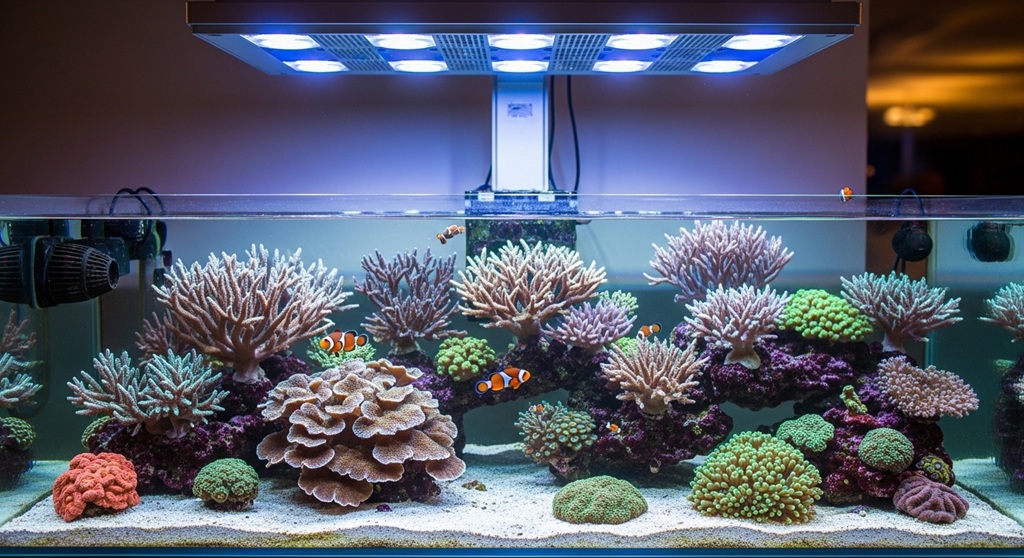

Reef aquarium lighting refers to specialized lighting systems designed to support coral photosynthesis and maintain a stable marine ecosystem. The best reef tank lighting mimics natural sunlight found in shallow ocean reefs, allowing corals to grow, color up, and remain healthy inside a closed aquarium environment.
Unlike standard aquarium lighting used for fish-only tanks, coral systems require specific wavelengths of light. Corals contain symbiotic algae called zooxanthellae. These algae perform photosynthesis and supply nutrients to the coral host. Without proper coral lighting spectrum and intensity, corals can lose color, stop growing, or even die.
Modern reef LED lights allow aquarists to control spectrum, intensity, and photoperiod with precision. This control helps replicate natural reef conditions while keeping energy consumption lower than traditional metal halide or fluorescent lighting systems.
Choosing the right lighting setup is therefore one of the most important decisions reef hobbyists make. A well-selected lighting system improves coral growth, enhances coloration, and stabilizes the entire reef tank ecosystem.
This guide explains how reef lighting works, what spectrum corals need, and how to choose the best reef tank lighting for different coral types.
Why Do Corals Need Specialized Reef Lighting?
Short answer: Corals require specialized lighting because they rely on photosynthesis through symbiotic algae that need specific wavelengths of light to produce energy.
In natural coral reefs, sunlight penetrates the ocean and provides a full spectrum of light. However, water filters certain wavelengths, especially red light, leaving mostly blue wavelengths reaching deeper coral colonies.
Inside an aquarium, artificial lighting must recreate this environment. Without the correct coral lighting spectrum, zooxanthellae cannot perform photosynthesis effectively.
Research from marine biology studies shows that corals thrive under wavelengths between 400 nm and 500 nm, particularly in the blue and violet spectrum. These wavelengths stimulate photosynthetic activity and support coral pigmentation.
Poor lighting can lead to several problems:
- Coral bleaching due to stress
- Slow skeletal growth
- Dull coloration
- Reduced polyp extension
- Increased algae competition
For reef hobbyists, this means lighting is not just about brightness. It is about providing the correct intensity, spectrum, and duration to support coral biology.
What Is the Ideal Coral Lighting Spectrum for Reef Tanks?
Short answer: The ideal coral lighting spectrum is dominated by blue and violet wavelengths between 400–500 nm, with balanced white light for visual clarity.
Coral lighting spectrum refers to the range of wavelengths emitted by aquarium lights. Different wavelengths influence coral growth and coloration in different ways.
| Light Spectrum | Wavelength Range | Role in Coral Health |
|---|---|---|
| Violet | 400–420 nm | Stimulates coral fluorescence |
| Royal Blue | 420–460 nm | Primary photosynthesis driver |
| Blue | 460–500 nm | Supports coral pigmentation |
| White | Broad spectrum | Improves visual balance |
| Red/Green | Limited usage | Enhances visual coloration |
Most reef LED lights are designed to emphasize blue spectrum output because it matches natural reef lighting conditions.
Experienced reef aquarists often run lighting programs where blue channels remain dominant while white channels are reduced. This not only supports coral health but also enhances coral fluorescence that hobbyists enjoy visually.
What Types of Reef Aquarium Lighting Are Available?
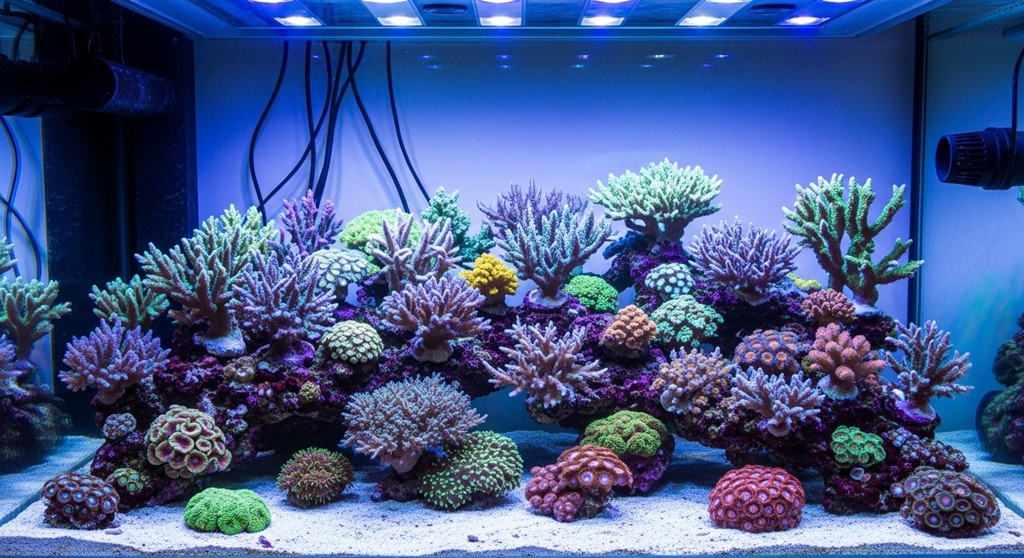
Short answer: The main reef lighting options include LED lights, T5 fluorescent lighting, and metal halide systems, with LED lighting being the most popular today.
Each lighting technology has advantages and limitations. Understanding these helps aquarists choose the best reef tank lighting for their setup.
LED Reef Lights
Reef LED lights have become the standard choice in modern reef aquariums. They offer programmable spectrum control, lower heat production, and energy efficiency.
Advantages of LED reef lighting include:
- Adjustable coral lighting spectrum
- Long lifespan (often 30,000–50,000 hours)
- Lower electricity consumption
- App-based control and scheduling
- Compact design
Because of these features, most reef hobbyists now choose LED systems when building new tanks.
T5 Fluorescent Lighting
T5 fluorescent lights were once widely used in reef aquariums. They provide even light distribution and reliable coral growth.
However, they have some drawbacks:
- Bulbs require replacement every 9–12 months
- Higher energy usage
- Less spectrum customization
Some advanced reef setups combine T5 lights with LEDs to achieve both strong coverage and spectrum control.
Metal Halide Lighting
Metal halide systems were historically used in large reef aquariums because of their strong light intensity.
They produce excellent coral growth but also generate significant heat and consume more power. As a result, many hobbyists have transitioned to reef LED lights.
How Much Light Intensity Do Corals Need?
Short answer: Coral lighting intensity is measured using PAR levels, with most reef tanks requiring 100–400 PAR depending on coral species.
PAR stands for Photosynthetically Active Radiation. It measures the amount of light available for photosynthesis.
Different coral types require different PAR levels.
| Coral Type | Recommended PAR Range |
|---|---|
| Soft Corals | 50–150 PAR |
| LPS Corals | 100–250 PAR |
| SPS Corals | 200–400 PAR |
For example, SPS corals such as Acropora require strong lighting and typically grow best under higher PAR levels. Soft corals, on the other hand, can thrive under lower light conditions.
Using a PAR meter helps reef hobbyists measure light intensity accurately and prevent overexposure.
What Is the Best Lighting Schedule for a Reef Tank?
Short answer: Most reef tanks perform best with a lighting schedule of 8–10 hours of full light and gradual sunrise and sunset transitions.
In nature, coral reefs experience gradual changes in light intensity throughout the day. Modern reef LED lights allow aquarists to replicate this cycle.
A typical lighting schedule may look like this:
- 08:00 – Sunrise ramp-up
- 10:00 – Full lighting intensity
- 10:00–18:00 – Peak lighting period
- 18:00 – Gradual sunset
- 20:00 – Moonlight or darkness
Running lights for too long can cause algae growth. Running them too short can slow coral growth. Maintaining a consistent schedule helps stabilize the reef ecosystem.
What Features Should You Look for in the Best Reef LED Lights?
Short answer: The best reef LED lights provide spectrum control, adjustable intensity, wide coverage, and programmable lighting schedules.
When choosing reef LED lights, consider the following factors.
Spectrum Customization
Good reef lighting systems allow independent control of blue, violet, white, and other channels. This lets aquarists tune the coral lighting spectrum for optimal growth.
PAR Output
Strong PAR output ensures enough light reaches deeper parts of the aquarium.
Coverage Area
A lighting unit must cover the entire tank evenly. Poor coverage can create shadow areas where corals struggle.
Programmable Control
Many reef LED lights offer smartphone apps for scheduling sunrise, sunset, and moonlight cycles.
Cooling System
Efficient cooling prevents overheating and extends the lifespan of LED components.
Choosing lights with these features ensures long-term stability for reef aquariums.
What Can We Learn from Real Reef Aquarium Case Studies?
Short answer: Real-world reef tank setups show that stable spectrum, proper PAR levels, and consistent schedules produce better coral growth.
A case study from public reef aquariums found that coral colonies exposed to stable blue-dominant LED lighting showed improved growth compared to inconsistent lighting setups.
One reef system used LED lighting producing approximately 250 PAR for SPS corals. Over a 12-month period, coral colonies increased skeletal growth by measurable margins while maintaining strong coloration.
Another reef hobbyist experiment compared T5 lighting with reef LED lights in two similar tanks. Results showed:
- Both systems supported coral growth
- LED systems consumed significantly less electricity
- LED tanks allowed better spectrum adjustments
These examples show that lighting technology matters, but stability matters even more. Consistent spectrum and proper PAR levels often determine coral success.
Conclusion: How Do You Choose the Best Reef Tank Lighting?
Choosing the best reef tank lighting comes down to understanding coral biology and recreating natural reef conditions inside your aquarium.
Corals rely on the right coral lighting spectrum, especially blue wavelengths, to power photosynthesis through symbiotic algae. They also require stable light intensity measured through PAR levels and a consistent daily lighting schedule.
For most reef hobbyists today, reef LED lights provide the best balance of performance, efficiency, and control. Their ability to customize spectrum and simulate natural sunlight cycles makes them ideal for both beginner and advanced aquarists.
Before buying a lighting system, evaluate your tank size, coral species, and PAR requirements. A well-planned lighting setup improves coral growth, enhances coloration, and creates a more stable reef ecosystem.
If you are planning a reef aquarium upgrade, start by reviewing modern LED lighting systems and measuring your tank’s lighting needs carefully.
Want healthier corals and a thriving reef tank? Explore our recommended reef lighting guides and product comparisons to find the best system for your aquarium today.
Frequently Asked Questions About Reef Aquarium Lighting
What is the best lighting for reef aquariums?
The best reef tank lighting is typically LED lighting designed for coral growth. Reef LED lights provide customizable spectrum, adjustable intensity, and energy efficiency while supporting coral photosynthesis.
How many hours should reef tank lights stay on?
Most reef aquariums require 8–10 hours of full lighting each day, along with gradual sunrise and sunset transitions. This schedule helps mimic natural reef conditions and supports coral health.
Do corals need blue light?
Yes. Blue light in the 420–460 nm range is essential for coral photosynthesis. It supports zooxanthellae algae inside coral tissues and enhances coral coloration.
Can corals get too much light?
Yes. Excessive lighting can cause coral stress or bleaching. Monitoring PAR levels and gradually acclimating corals to new lighting systems helps prevent light shock.
Are LED lights better than T5 for reef tanks?
LED lights are generally preferred because they offer spectrum control, lower energy consumption, and longer lifespan. However, some reef hobbyists combine LEDs with T5 lighting for broader coverage.
How far should reef lights be above the tank?
Most reef LED lights are mounted 8–12 inches above the aquarium. This height helps distribute light evenly and reduce hotspots that could stress corals.
Do reef tanks need moonlight lighting?
Moonlight lighting is optional but can simulate natural night cycles. Low-intensity blue LEDs are often used to create a nighttime reef viewing effect without disturbing coral behavior.
Read More Also: How to Choose the Right King Bedroom Set on Sale
Find out: How to Fix a Loose Stair Railing (Home Safety)