
You love your pets, but you don’t love the muddy paw prints, the unexpected hairballs, or the occasional “accident” on the kitchen floor. Scrubbing on your hands and knees is exhausting, and a standard mop just pushes the mess around. You need a cleaning tool that tackles both wet spills and dry debris in one pass. That is exactly why the best wet dry mop for pets has become a must-have for animal owners. It vacuums up fur and crumbs while simultaneously mopping away sticky residue and stains. The problem is that not all models are built to handle the specific challenges of pet ownership. This guide will walk you through exactly what to look for, so you can stop wasting time on ineffective cleaning tools and get back to enjoying your furry friends.
What Makes a Wet Dry Mop Different for Pet Owners?
A standard wet dry mop is a 2-in-1 device that vacuums dry debris and then mops the floor with water or cleaning solution. For pet owners, the key differences are higher suction power, tangle-free brush rolls, and durable materials that resist odors and stains from animal waste. Unlike a basic model intended for light dust, a pet-specific version is engineered to handle the high volume of fur, dander, and biological messes that come with having a dog or cat in the home.
Increased Suction for Fur and Dander
Pets shed a lot. A budget vacuum mop might pick up a few crumbs, but it will fail on a thick layer of Golden Retriever fur. The best models for pets offer suction measured in air watts or pascals that rival a dedicated stick vacuum. This ensures that dry pet hair is pulled off the floor before the wet mop pad even touches the surface.
Self-Cleaning and Tangle-Free Brush Rolls
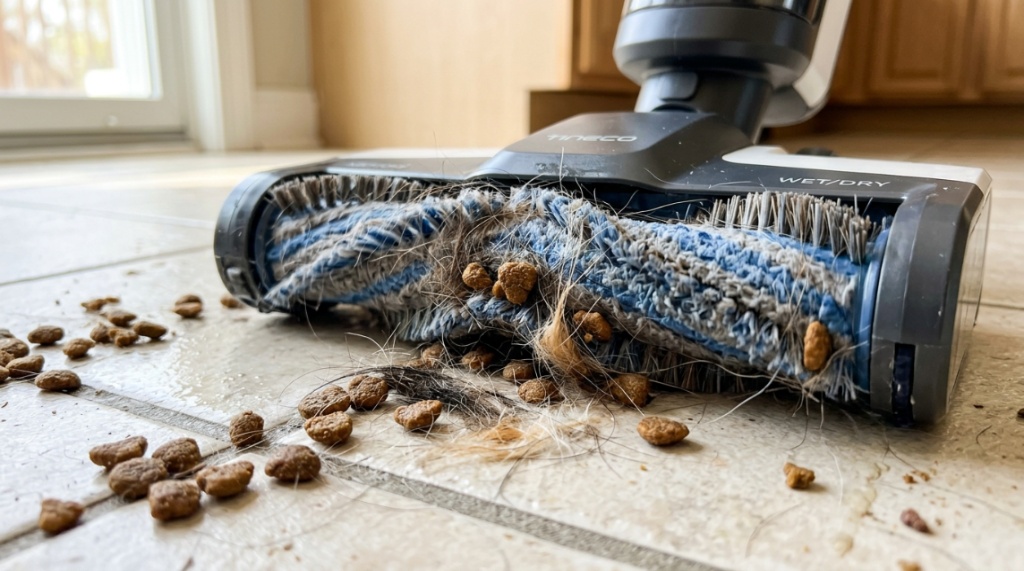
Long hair and pet fur are the enemies of standard brush rolls. Many pet-specific wet dry mops feature rubber fins or specialized combs that actively remove hair from the brush during operation. This prevents the machine from clogging and saves you the unpleasant task of cutting hair off the roller with scissors.
Tank and Pad Materials That Resist Odors
Pet urine and vomit can leave lingering smells in a mop pad or dirty water tank. The best wet dry mop for pets uses antimicrobial treatments on the pads and easy-to-rinse tanks. Some models even allow you to add pet-safe enzyme cleaners directly to the water tank to break down biological messes without lingering odors.
How Does a Wet Dry Mop Handle Solid and Liquid Pet Messes?
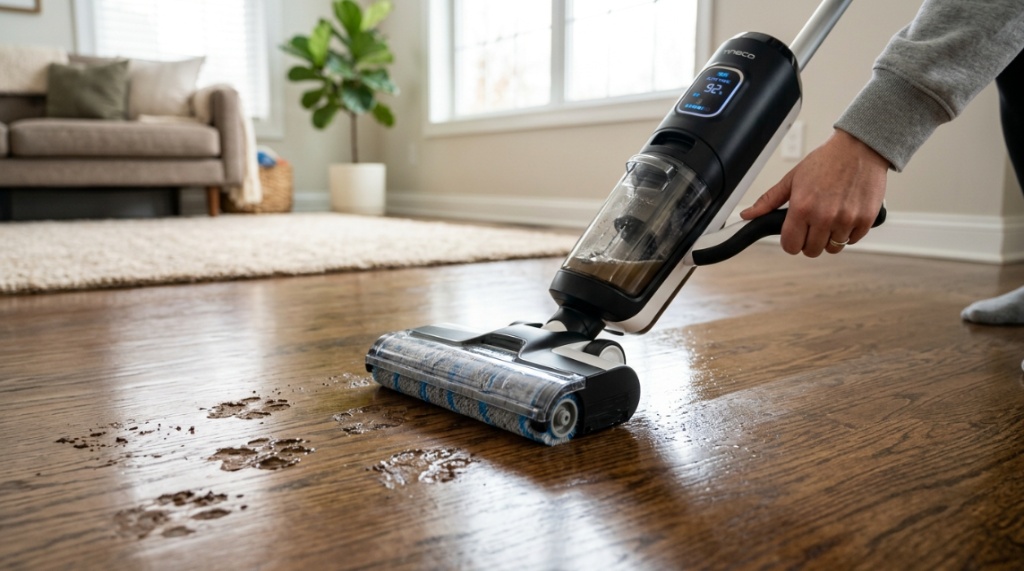
The machine operates in two distinct modes. First, the vacuum suction pulls up dry debris like fur, kibble, and litter into a separate bin. Then, the water dispensing system wets a roller or pad that scrubs the floor and picks up liquid spills. For pet messes, the transition between these modes must be seamless to prevent turning dry fur into a wet, sticky sludge on your floor.
The Two-Step Cleaning Process
Most high-quality models automatically sense the type of mess. When you encounter a pile of fur, the suction ramps up to vacuum it away. When you hit a sticky juice spill, the water flow increases to saturate the pad. Effective pet mops have a “max” mode that combines high suction with heavy water flow for tough messes like dried-on mud or caked-on food.
Dealing with Liquid “Accidents”
Hygiene is the main concern here. You do not want to spread urine water across your entire kitchen floor. The best wet dry mop for pets uses a clean water tank for washing and a separate dirty water tank for collection. This separation ensures you are never reapplying dirty water to your floor. The dirty water is immediately pulled into the waste tank, leaving a clean, sanitized surface.
Preventing Hair Clogs in the System
One of the biggest complaints about standard models is hair wrapping around the roller. Pet models solve this with “anti-tangle” technology. Look for a roller made of a fabric and rubber blend that repels hair, or a model with a built-in cleaning cycle that reverses the roller direction to fling hair into the dustbin.
Which Features Are Crucial for Pet Stains and Odors?
Not all features are created equal. When shopping, prioritize models that offer a dedicated “pet mode,” a high-capacity dirty water tank, and washable, reusable pads. These features directly address the most common frustrations pet owners face after cleaning.
Dedicated Pet Mode or Boost Setting
This setting increases both suction and scrubbing speed. It is essential for tackling muddy paw prints or dried-on drool. Without a boost mode, a standard mop might just smear the mud around, leaving a thin brown film on your floors.
Large Dirty Water Tank Capacity
Pet messes are frequent. A small 200ml dirty tank will fill up quickly and require you to stop mid-clean to empty it. Look for a model with at least a 500ml or larger dirty water tank. This allows you to clean an entire house without interruption.
Washable and Replaceable Mop Pads
Disposable pads are wasteful and expensive. The best wet dry mop for pets comes with washable microfiber pads. You can toss them in the washing machine with hot water and bleach to sanitize them. Having two sets of pads allows you to use one while the other is drying.
Can You Use Cleaning Solutions with a Pet Wet Dry Mop?
Yes, but you must be careful. Many mops recommend using their own branded cleaning solutions to prevent damage to the water system. However, for pet messes, you often need an enzyme-based cleaner to break down urine proteins. You can use these, but only in models that allow you to add solution directly to the water tank.
Pet-Safe Cleaning Solutions
Avoid anything with bleach or harsh ammonia, as these can damage the machine and irritate your pet’s paws. Look for formulas that are specifically labeled as “pet-safe” and “enzyme-based.” These break down the organic matter in pet stains, eliminating the odor at the source rather than just masking it.
How to Add Solution to the Tank
Most models have a separate solution reservoir that mixes the cleaner with water automatically. You simply fill the tank with water to the fill line, add the recommended capful of solution, and the machine does the rest. Never pour solution directly into the dirty water tank or the main vacuum path.
The Importance of Rinsing After Use
After cleaning a pet accident, you should run a clean water rinse cycle through the machine. This flushes out any remaining residue from the urine or cleaner that could clog the internal tubes. It also prevents the rubber seals from absorbing bad smells over time.
How to Choose Between a Corded vs. Cordless Model for Pets
This decision depends entirely on the size of your home and the number of pets. Cordless models offer freedom of movement, which is great for chasing a messy dog around the living room, but they have limited battery life. Corded models provide unlimited runtime but require you to stay near an outlet.
Battery Life and Pet Hair Volume
If you have multiple large dogs, you will likely need more than 30 minutes of runtime to clean the whole house. A cordless model with a swappable battery is ideal. You can have one battery charging while you use the other. If your home is under 1,500 square feet, a standard cordless model with a 35-minute runtime is usually sufficient.
Power Consistency with Corded Models
Corded models never lose suction due to a dying battery. This is critical for deep-cleaning high-traffic areas where pets walk. The downside is the hassle of managing a long cord. If you choose corded, look for a model with a 25-30 foot cord to avoid constantly switching outlets.
How to Maintain Your Wet Dry Mop for Pet Hair and Accidents
Regular maintenance is the secret to a long-lasting machine. Pet owners must be diligent about cleaning the dirty water tank and brush roll after every use. Leaving wet pet hair or dirty water in the machine for hours will lead to mold, mildew, and a terrible smell every time you turn it on.
Daily Cleaning Routine
- Empty the dirty water tank after every use.
- Remove the brush roll and check for tangled hair.
- Wipe down the rubber seal on the dirty tank.
- Run a clean water rinse cycle if you used cleaning solution.
Weekly Deep Cleaning
Once a week, remove the brush roll and wash it in warm, soapy water. Soak the mop pads in a mixture of vinegar and water to remove odors. Use a small brush to clean out the nozzle where the vacuum suction occurs; pet hair often packs tightly into this area.
Replacing Worn Parts
Brush rolls and mop pads wear out faster in pet homes. Expect to replace the brush roll every 4-6 months and the mop pads every 3-4 months. Using worn parts will reduce cleaning effectiveness and may cause the motor to work harder than necessary.
What Is the Best Floor Type for a Pet Wet Dry Mop?
Most models are designed for sealed hard floors, such as tile, vinyl, laminate, and sealed wood. You should never use a wet mop on unsealed hardwood, as the moisture will cause the wood to warp and swell. For area rugs, you need a specialized model that can handle carpet as well.
Tile and Grout Cleaning
Tile floors with grout lines are a magnet for pet hair and dirt. A wet dry mop excels here because the scrubbing pad can get into the grout lines. The powerful suction pulls dirty water out of the grout, leaving it visibly cleaner than a traditional mop ever could.
Hardwood Floor Precautions
If you have hardwood floors, always use the lowest water setting. Standing water is the enemy of hardwood. Look for a model that has a “hardwood” or “low moisture” mode. Never use the spot clean or boost mode on hardwood, as the high water flow can damage the finish.
Budget Considerations: Is a Pet-Specific Model Worth the Cost?
The price of a good wet dry mop for pets ranges from $150 to $600. Entry-level models work fine for small messes, but a higher-end model is a worthwhile investment if you have multiple pets or large dogs. The extra cost buys you better suction, larger tanks, and more durable parts that will last for years.
Budget-Friendly Options ($150 – $250)
These models are lightweight and perfect for spot cleaning. They may have smaller tanks and less suction, but they are excellent for daily touch-ups of muddy paws and spilled water bowls. They are also easier for smaller individuals to carry up and down stairs.
Premium Options ($300 – $600)
Premium models come with digital displays, self-cleaning cycles, and much larger water tanks. They often feature “edge cleaning” technology that allows the mop to reach into corners where pet hair accumulates. If you have a large home with long-haired pets, this category is where you will find the best value.
Common Mistakes When Using a Wet Dry Mop for Pets
Even the best machine will fail if you use it incorrectly. The most common mistake is trying to pick up wet pet waste without first removing the solid material. This will clog the machine instantly. Another mistake is using too much water, which leaves floors slippery and can damage the vacuum motor.
Skipping the Pre-Clean for Solid Waste
Always pick up solid waste with a paper towel first. The vacuum is designed for hair and small crumbs, not large piles of vomit or poop. Trying to vacuum up solids will cause a blockage in the pipe that is difficult to clear.
Using the Wrong Cleaning Solution
Using dish soap or laundry detergent in the water tank will cause excessive foaming. This foam can get into the motor and ruin the machine. Stick to the manufacturer’s recommended solution or a pet-safe floor cleaner that is specifically labeled as “low foam.”
Comparing the Top Compact vs. Full-Size Models
Your choice between a compact or full-size model depends on storage space and cleaning frequency. Compact models are great for apartments and quick pickups, while full-size models are better for whole-house cleaning with multi-pet households.
Compact Wet Dry Mops for Small Homes
- Pros: Lightweight, easy to store, affordable.
- Cons: Small water tanks, shorter battery life, less suction.
- Best for: Cat owners or homes with a single small dog.
Full-Size Wet Dry Mops for Large Spaces
- Pros: Long runtime, large tanks, superior cleaning power.
- Cons: Heavier, more expensive, takes up more storage space.
- Best for: Homes with multiple dogs or long-haired breeds.
Frequently Asked Questions
Can I use a wet dry mop on area rugs?
Only if the model specifically states it can handle low-pile rugs. Most wet dry mops are designed for hard floors only. Using them on thick carpet will overload the motor. Check the manufacturer’s instructions before attempting to clean a rug.
How often should I replace the mop pads?
For pet owners, replace mop pads every 3 to 4 months. If you notice the pad is not absorbing water well or leaving streaks, it is time to replace it. Washable pads should be replaced sooner than disposable ones.
Will a wet dry mop remove pet urine smell?
It can remove the surface residue, but it may not eliminate the smell if the urine has soaked deep into grout or unsealed wood. For deep odor removal, you may need to pre-treat the area with an enzyme cleaner before using the mop.
Is it safe to use around puppies?
Yes, but keep the puppy away from the dirty water tank. The tank contains bacteria and chemicals. Also, ensure the floor is completely dry before letting the puppy walk on it, as wet floors can cause them to slip or get dermatitis on their paws.
Can I vacuum dry pet hair with the mop attachment off?
Some models have a “dry vacuum only” mode. However, the machine is heavy and clumsy to use as a standard vacuum. It is better to use a dedicated vacuum for dry hair and the wet dry mop for wet messes and deep scrubbing.
How do I clean the brush roll if it gets smelly?
Remove the brush roll and soak it in a mixture of hot water and white vinegar for 15 minutes. Scrub it with an old toothbrush to remove hair and debris. Rinse thoroughly and let it air dry completely before reinstalling.
What is the best way to store the mop?
Always empty both the clean and dirty water tanks. Store the mop upright in its charging dock (if cordless) or hanging on a wall mount. Never store it with water in the tanks, as this will lead to mold growth and bad smells.
Conclusion
Finding the best wet/dry mop for pets comes down to matching the machine’s features to your specific mess level. Look for models with tangle-free brush rolls, high suction power, and large dirty water tanks. Avoid the common mistake of using too much water or the wrong cleaning solution. Whether you choose a compact model for quick cleanups or a full-size powerhouse for deep cleaning, the right tool will save you hours of scrubbing time and keep your floors truly clean and odor-free. Stop fighting with fur and sticky paw prints. Invest in a quality wet/dry mop that is built specifically for the chaotic, wonderful world of pet ownership.