You’ve finally saved enough for that offshore fishing trip, only to realize your anchor line looks like frayed shoelaces. Saltwater is unforgiving—it rots, chafes, and weakens ropes faster than freshwater ever could. But here’s the kicker: you don’t need to spend a fortune to get a reliable rode. The secret lies in knowing which materials, diameters, and construction methods offer the best value for marine use. In this guide, we’ll break down exactly how to source a cheap anchor rope for saltwater that won’t snap when a sudden squall hits, how to spot bargains that are actually traps, and why the cheapest option upfront often costs more in the long run.
What Makes a Rope Suitable for Saltwater Use?
A saltwater-rated anchor rope must resist UV degradation, abrasion, and mildew while retaining flexibility under load. Nylon is the gold standard because it stretches up to 30% to absorb shock. Polyester and polypropylene are cheaper but lack the same shock absorption or UV resistance. For budget buyers, the sweet spot is a three-strand nylon rope with a breaking strength at least four times your boat’s weight.
Why Nylon Dominates Saltwater Anchor Lines
Nylon’s molecular structure absorbs water and swells slightly, which increases its grip on cleats and reduces slipping. More importantly, its elasticity prevents sudden jerks from ripping out your anchor or stressing the bow eye. Polyester, while resistant to UV, doesn’t stretch enough for heavy seas. Polypropylene floats—convenient for retrieving—but degrades rapidly in sunlight and offers poor abrasion resistance against sand and coral.
Key Specifications to Check Before Buying
- Breaking strength: Should exceed your boat’s total weight by 4–5 times.
- Diameter: Larger diameter equals more surface contact but also more weight and cost.
- UV inhibitors: Look for additives that slow sun damage.
- Mildew treatment: Prevents rot in damp rode lockers.
Why You Should Avoid Hardware Store “General Purpose” Rope
General-purpose polypropylene from big-box stores is often labeled “marine grade” but lacks the tight weave of true anchor line. These ropes generate excessive heat when paying out, causing them to fuse and stiffen. Worse, their low melting point means rapid friction can cause failure during a long, fast drop. For anchoring, always choose a rope explicitly rated for anchoring, not docking or towing.
How Much Should You Pay for a Quality Anchor Rope?
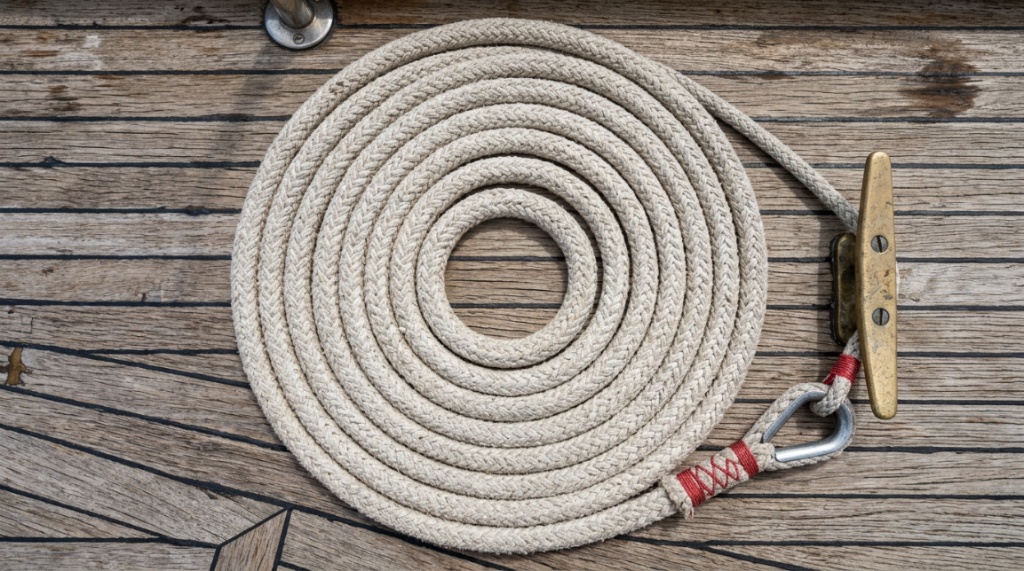
Expect to pay between $0.50 and $1.20 per foot for 1/2-inch three-strand nylon in 2024 pricing. Anything below $0.30 per foot likely lacks UV inhibitors or has a low strand count. However, you can often buy in bulk (500-foot spools) to cut costs by 30–40%. Compare total lifetime cost, not just upfront price—a $30 rope that lasts three seasons is cheaper than a $15 rope that lasts one.
Breaking Down Price vs. Performance Tiers
| Tier | Price per Foot | Best For |
|---|---|---|
| Economy polypropylene | $0.15–$0.25 | Temporary mooring in calm freshwater |
| Standard nylon (3-strand) | $0.40–$0.70 | Recreational boats under 30 feet |
| Premium nylon (8-plait) | $0.90–$1.30 | Offshore fishing, heavy weather, longer service life |
Where to Find Discounts Without Compromising Quality
Check marine surplus stores, online auction sites for seller overstock, and seasonal sales at major retailers like West Marine or Defender. Another underrated trick: contact local commercial fishing supply houses—they often sell “ends” (leftover lengths) at half price. Always inspect for dry rot or sun bleaching before purchasing discounted rope.
Why Buying a Longer Rope Saves Money in the Long Run
You’ll need a scope ratio of 7:1 for storm conditions—meaning for every foot of depth, you need 7 feet of rope. A 200-foot rope lets you anchor in 28 feet of water safely. Buying a 600-foot spool at a lower per-foot price ensures you have spare sections when chafing forces you to cut off damaged ends. That versatility turns a single purchase into a multi-season investment.
Which Anchor Rope Design Is the Best Value for Boats Under 30 Feet?
Three-strand twisted nylon offers the best balance of cost, elasticity, and durability for most recreational boaters. It’s easy to splice, simple to inspect for internal damage, and forgiving when you make knots. Eight-plait and double-braid nylon are stronger and easier to handle but cost 50–100% more. When budget is your primary constraint, three-strand is the undisputed winner.
Three-Strand Nylon: The Budget Workhorse
This construction features three interlocking strands that shed sand and dirt effectively. Its round profile reduces snagging on rocky bottoms. While it can kink if mis-handled, proper coiling solves this issue. Most commercial anchor rodes use this design because it offers predictable stretching and doesn’t flatten under load, Before selecting your marine line, ensure you understand the core differences in manufacturing standards—much like choosing the Best Climbing Rope for Safety and Performance when heading outdoors.
Eight-Plait Nylon: Worth the Upgrade?
Eight-plait looks like a square braid and doesn’t twist under load, making it ideal for windlasses. It’s more flexible when cold and resists crushing on sharp edges. However, it costs roughly 40% more. For boats under 25 feet using manual anchoring, the extra expense rarely translates to noticeable performance gains unless you anchor daily.
Comparison Table: Three-Strand vs. Eight-Plait
| Feature | Three-Strand | Eight-Plait |
|---|---|---|
| Cost per foot (1/2″) | $0.55 | $0.90 |
| Stretch at break | ~30% | ~25% |
| Torsional twist | Yes | No |
| Splice difficulty | Easy | Moderate |
How to Extend the Life of Your Anchor Rope to Reduce Replacement Costs
Rinse your anchor rope with fresh water after every saltwater trip, air-dry it loosely coiled, and store it out of direct sunlight. Use a rope chafe guard where it rubs against the bow roller or rock ledges. Inspect the first 10 feet—the part closest to the anchor—for embedded shell fragments that can cut fibers from inside. These habits can double a rope’s service life.
Step-by-Step Rinse and Drying Routine
- Pay out the entire rope onto a clean deck.
- Spray with a freshwater hose at medium pressure.
- Use a mild soap (like Dawn) to remove salt crystals.
- Rinse thoroughly—soap residue attracts dirt.
- Coil loosely in a figure-eight pattern to allow airflow.
- Hang in a shaded, dry area for 24 hours.
Signs That Your Rope Needs Immediate Replacement
- Fuzzing or broken filaments over 20% of the circumference.
- Hard or stiff sections that won’t bend.
- Visible cuts, especially transverse cuts across the line.
- Discoloration (gray or brown streaks) indicating UV damage.
Can You Use a Chain-and-Rope Combo to Cut Costs While Boosting Safety?
Yes—adding 15–20 feet of galvanized chain between the anchor and rope reduces chafe by keeping the rope off the seabed. This hybrid setup lets you buy cheaper, thinner rope because the chain absorbs the initial load. For a 25-foot boat, a 3/8-inch galvanized chain costs about $30 and extends rope life by up to 80%.
How Much Chain Should You Use?
A general rule is 1 foot of chain for every 1 foot of water depth. For moderate conditions, 15–20 feet is sufficient. The chain’s weight creates a catenary curve that acts as a shock absorber, reducing peak loads on the rope by 25–30%. This means you can safely drop to a 1/2-inch rope instead of 5/8-inch, saving 15% on cost.
Pros and Cons of a Chain-Rope Hybrid
Pros: Lower rope cost, better holding power, easier to haul because chain sinks.
Cons: More weight and space required, chain can scratch gelcoat, and you need a splice or shackle connection.
Where Is the Best Place to Buy Anchor Rope Online for Saltwater?
Online retailers like Amazon, Hodges Marine, and Rope Warehouse offer the widest selection and deepest discounts. However, avoid generic listings that omit fiber content or breaking strength. Always filter by “3-strand nylon marine anchor line” and check the manufacturer’s data sheet. Reading recent buyer photos helps spot quality discrepancies compared to the listing.
Top Three Trusted Online Suppliers
- Rope Warehouse: Sells by the foot with bulk discounts starting at 100 feet.
- Defender Industries: Known for selling premium brands at near-wholesale prices.
- Amazon Basics: Surprisingly solid value for light-duty use, but verify the exact tensile strength.
What to Look For in Customer Reviews
Pay attention to comments about flexibility in cold weather, resistance to abrasion on rough pilings, and whether the rope arrived with kinks. A one-star review about “fraying after one season” is more telling than a five-star review from someone who used it twice. Cross-reference review dates—runs lasting over 6 months indicate consistent quality.
Is Thicker Rope Always Better for Anchoring?
No—thicker rope is heavier, uses more space, and costs significantly more without proportional strength gains. A 5/8-inch rope has about 1.6 times the breaking strength of a 1/2-inch rope, but it costs 2.5 times as much. The optimal diameter depends on your boat size and windage, not just displacement. Always consult a sizing chart after considering your boat’s freeboard and rode length.
How to Match Rope Diameter to Your Boat Weight
| Boat Length | Boat Weight (lbs) | Recommended Dia. (3-strand nylon) |
|---|---|---|
| 16–20 ft | 1,500–3,000 | 1/2 inch |
| 21–25 ft | 3,500–6,000 | 9/16 inch |
| 26–30 ft | 6,500–10,000 | 5/8 inch |
When Thinner Rope Plus More Length Is Smarter
If your typical anchorage depth is 20 feet, a 1/2-inch rope with 140 feet of length gives you a 7:1 scope. That’s safer than a 5/8-inch rope with only 100 feet (5:1 scope) because the extra length allows the rope to absorb energy along its entire length. Length can compensate for smaller diameter, but only within 15–20% strength limits.
Why Does UV Exposure Damage Anchor Rope Faster Than Salt?
Salt crystals abrade the fibers mechanically, but UV rays break down polymer bonds chemically. A rope that dries in direct sunlight loses 50% of its strength within six months. Salt alone causes roughly 20% strength loss over a year. Therefore, storing your rope below deck or in a canvas bag when not in use is more critical than rinsing it—if you had to choose one protection method.
UV Degradation: The Silent Killer
UV inhibitors added during manufacturing reduce but don’t eliminate damage. Black or dark blue ropes withstand UV better than white ones because pigments block light penetration. However, dark ropes are harder to inspect for internal damage. A compromise: buy white rope and cover the upper 15 feet—the section exposed to sunlight when anchored—with a removable sheath.
Storage Solutions That Prolong Rope Life
- Use a bucket with a lid for the entire rode.
- Keep it out of the cockpit’s direct sun.
- If leaving on deck, cover with a UV-protective canvas.
- Never leave rope compressed under heavy gear.
When Should You Replace a Saltwater Anchor Rope?
Replace your rope every two to three years for regular coastal cruising, or every season if you anchor out every weekend in Florida or the Caribbean. The rope’s breaking strength declines linearly with UV exposure and fatigue, so don’t wait for visible damage. For cheap anchor rope for saltwater, the cost of replacement is far less than the risk of losing a $30,000 boat to a snapped line during a storm surge.
Testing Your Rope’s Strength at Home
Twist the rope between your fingers. If it feels soft and mushy, internal fibers are breaking down. Another test: bend the rope sharply over a nail. If you see a permanent crease, the core is damaged. These simple tactile checks catch problems before they become catastrophic failures.
Why You Should Always Carry a Spare Rode
Even a premium rope can catch a sharp barnacle and slice through. Stow a cheaper 100-foot secondary line (polyester works fine for emergency anchoring) in a dry bag. This insurance costs under $30 and prevents a stranded night or worse. The inconvenience of carrying extra weight far outweighs the risk of not having a backup.
Frequently Asked Questions
How long does cheap anchor rope last in saltwater?
Budget nylon ropes typically last one to two years with regular saltwater use and proper rinsing. Polypropylene may only last a few months. UV exposure is the main culprit, so store your rope inside a locker when not underway.
Can I use dock line rope for anchoring?
Dock lines are usually twisted or braided nylon without the same abrasion resistance required for seabed contact. Use them only in calm, mud-bottom conditions. For sandy or rocky anchorages, most dock lines will chafe through within hours.
Is 1/2 inch anchor rope strong enough for a 30-foot boat?
Yes, if your boat weighs under 8,000 pounds and you use a 7:1 scope. The breaking strength of 1/2-inch three-strand nylon is around 7,500 pounds. Always match the rope to the weakest point in your system—usually the shackle or anchor shank.
What is the best knot for tying anchor rope to chain?
The anchor bend knot is strongest and easy to untie after loading. Alternatively, use a thimble and splice for a permanent, snag-free connection. Avoid simple knots like bowlines—they reduce rope strength by 30–40%.
Does saltwater weaken anchor rope faster than freshwater?
Yes—salt crystals abrade the fibers and attract more UV damage. Saltwater also supports marine growth that can penetrate the strands. Rinsing with freshwater after each trip neutralizes most of the harm, but replacement cycles remain shorter than in freshwater.
Can I use a thinner rope if I have a windlass?
A windlass reduces physical effort but not the forces on the rope. Use the same diameter recommendation as for manual anchoring. However, windlasses require non-rotating rope like eight-plait to avoid torque tangles.
Why does anchor rope feel stiff after drying in the sun?
Heat causes the nylon fibers to fuse slightly at the surface. This reduces flexibility and makes the rope more prone to cracking under load. Rinse and dry in the shade to avoid this issue, especially in tropical climates.
Final Thoughts on Choosing Affordable Anchor Rope
Finding an affordable anchor rope for saltwater comes down to prioritizing nylon construction, buying the right diameter for your boat, and combining it with a chain segment. By focusing on longevity and avoiding ultra-cheap polypropylene, you can save money over time instead of repeatedly replacing failing equipment. Take the extra steps to rinse, dry, and store properly—your wallet and your safety will thank you simultaneously. Start with a quality three-strand nylon from a trusted discount marine supplier for the best balance of up-front savings and reliable performance.