Roof leaks can cause serious damage to your home if left undetected. Finding these leaks early saves money and prevents structural problems. Janowitz roofing professionals use several proven methods to locate even the smallest leaks. Understanding these techniques helps homeowners recognize when they need expert help.
Why Early Leak Detection Matters
Water damage spreads quickly once it enters your home. A small leak can lead to mold growth, wood rot, and damaged insulation. Additionally, water stains on ceilings indicate that damage has already occurred inside your walls. Therefore, regular inspections prevent costly repairs down the road.
Many homeowners ignore minor signs of leaks. However, waiting too long makes repairs more expensive. Professional detection methods find problems before they become emergencies.
Visual Inspection Techniques
The most basic method involves a thorough visual examination of your roof. Janowitz technicians walk across the entire surface looking for obvious problems. They check for missing shingles, cracked flashing, and damaged valleys.
Inside your home, inspectors examine attic spaces carefully. Water stains on wood beams show where moisture enters. Furthermore, they look for daylight coming through the roof boards. This simple technique often reveals major issues quickly.
Inspectors also check your gutters and downspouts. Clogged gutters cause water to back up under shingles. Therefore, cleaning these systems prevents many common leaks.
Water Testing Methods
Water testing provides concrete evidence of leak locations. Janowitz professionals use garden hoses to simulate rainfall on specific roof sections. One person stands inside while another sprays water outside.
This controlled approach isolates the exact entry point. The inside observer watches for dripping water or moisture. Moreover, this method works well for leaks that only appear during heavy rain.
Section-by-section testing ensures thorough coverage. Technicians start at the lowest point and work upward. This prevents water from running down and creating false positives.
Infrared Thermography
Modern technology has revolutionized leak detection. Infrared cameras detect temperature differences in roofing materials. Wet areas appear cooler than dry sections because water retains cold temperatures.
This non-invasive method finds leaks without damaging your roof. Janowitz technicians scan the entire surface from the ground or attic. Additionally, infrared testing works especially well on flat or low-slope roofs.
The camera creates detailed images showing problem areas. These thermal maps guide repair crews to exact locations. However, this method works best during specific weather conditions when temperature contrasts are strongest.
Moisture Meters and Sensors
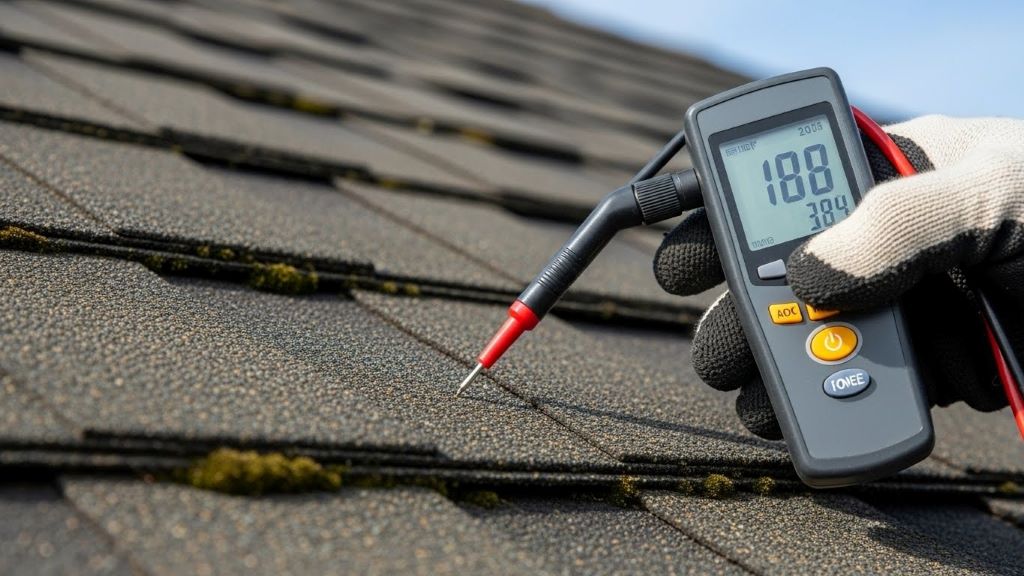
Electronic moisture meters measure water content in roofing materials. Technicians press these devices against wood, insulation, and other surfaces. Higher readings indicate water presence even when no visible signs exist.
These tools help confirm suspected leak locations. Furthermore, they track how far moisture has spread from the entry point. This information helps contractors plan complete repairs.
Some advanced systems use remote sensors. These devices monitor moisture levels continuously and send alerts when problems develop. Therefore, building owners can catch leaks immediately after they start.
Smoke Testing Procedures
Smoke testing works well for finding air leaks that also allow water entry. Technicians fill the attic space with non-toxic smoke. The smoke escapes through any openings in the roof.
Outside observers watch for smoke emerging from the roof surface. This visual confirmation pinpoints exact leak locations. Additionally, smoke testing reveals problems with roof ventilation systems.
This method proves particularly useful for complex roof designs. Multiple valleys, skylights, and chimneys create numerous potential leak points. Smoke makes these hidden problems visible.
Dye Water Testing
Colored dye mixed with water creates an obvious trail. Janowitz technicians pour dye solution on suspected leak areas. Inside observers watch for colored water appearing on ceilings or walls.
This technique confirms that water follows specific paths. Moreover, it helps when multiple potential entry points exist. The colored water eliminates guesswork about which area needs repair.
Food-grade dyes ensure safety for homes and landscapes. The color washes away easily after testing completes. However, this method requires careful application to avoid staining.
Nuclear Moisture Detection
Large commercial buildings sometimes require specialized equipment. Nuclear moisture scanners use low-level radiation to detect water in roofing systems. This method covers large areas quickly without damaging the roof.
The scanner measures hydrogen atoms present in water molecules. Higher concentrations indicate moisture problems. Therefore, facility managers can map entire roof conditions efficiently.
While expensive, this technology saves money on large properties. According to the National Roofing Contractors Association, regular moisture surveys extend roof life significantly. Early detection prevents premature replacement costs.
Electrical Capacitance Testing
Capacitance meters measure how materials store electrical charges. Wet roofing materials have different capacitance values than dry ones. Technicians scan the roof surface systematically with these devices.
This method works through many roofing membranes without penetration. Additionally, it creates detailed moisture maps showing problem severity. Building owners receive comprehensive reports guiding repair priorities.
The technology continues improving with better accuracy and faster scanning. However, it requires trained operators to interpret results correctly.
Regular Maintenance Inspections
Prevention remains the best leak detection strategy. Janowitz recommends scheduled inspections at least twice yearly. Spring and fall inspections catch problems before extreme weather arrives.
Professional inspections include all detection methods appropriate for your roof type. Technicians document conditions with photos and detailed reports. Furthermore, they provide cost estimates for any necessary repairs.
Homeowners can perform basic checks between professional visits. Looking for missing shingles, checking attic moisture, and clearing debris helps maintain roof health. However, climbing on roofs involves serious safety risks that professionals handle better.
According to This Old House, proper roof maintenance can extend its lifespan by 5 to 10 years. Regular inspections catch minor issues before they require major repairs.
Conclusion
Janowitz roofing leak detection combines traditional methods with modern technology. Visual inspections provide initial assessments while advanced tools confirm exact leak locations. Water testing, infrared cameras, and moisture meters each serve specific purposes in comprehensive evaluations.
Early detection prevents expensive damage to your home’s structure and interior. Regular professional inspections identify problems before they become emergencies. Additionally, combining multiple detection methods ensures thorough coverage of your entire roofing system.
Homeowners should schedule inspections at least twice yearly and after major storms. Professional technicians have the training and equipment to find leaks safely and accurately. Investing in proper detection saves money compared to repairing extensive water damage.
Frequently Asked Questions
How often should I have my roof inspected for leaks?
Most roofing experts recommend professional inspections twice per year, typically in spring and fall. Additionally, schedule an inspection after any major storm or severe weather event. Older roofs may benefit from more frequent checks.
Can I detect roof leaks myself or do I need a professional?
Homeowners can spot obvious signs like water stains or missing shingles. However, professionals have specialized equipment that finds hidden leaks before visible damage occurs. Therefore, annual professional inspections remain essential even if you perform regular visual checks.
How much does professional leak detection cost?
Basic visual inspections typically cost between $150 and $400. Advanced methods like infrared thermography may cost $500 to $1,000 depending on roof size. However, detecting leaks early prevents repair costs that often exceed $5,000 for extensive water damage.
What are the most common signs of a roof leak?
Water stains on ceilings or walls indicate active leaks. Additionally, watch for peeling paint, mold growth, and musty odors in upper floors or attics. Outside, missing or damaged shingles, cracked flashing, and clogged gutters often accompany leak problems.
How long does roof leak detection take?
Simple visual inspections usually take one to two hours for average-sized homes. Comprehensive evaluations using multiple detection methods may require three to four hours. Larger or more complex roofs need additional time for thorough assessment.
Related Topics:
Protect Your Investment: The Importance of Timely Slate Roof Repairs
5 Telling Signs Roof Is Crying Out for Replacement: Don’t Ignore the Silent Signals