
Key Takeaways
- Pest activity changes with temperature, rainfall, food availability, and access to shelter.
- Brief seasonal inspections can reveal warning signs before an infestation becomes established.
- Sealing gaps, repairing leaks, managing vegetation, and removing standing water are effective first steps.
- Integrated pest management emphasizes prevention, monitoring, identification, and targeted treatment.
- The best calendar should be adjusted for local weather, property design, and past pest concerns.
Pest prevention works best when it is part of regular home care rather than an emergency response. A practical year-round routine helps homeowners notice moisture, food sources, entry points, and shelter before those conditions lead to a larger problem. For households that need help identifying persistent issues or addressing difficult ones, Pointe Pest Control can be a useful starting point for professional guidance.
Why a Seasonal Plan Works Better Than a One-Time Check
Pests respond quickly to changing outdoor conditions. Heavy rain can create moisture problems and standing water, drought can drive insects and rodents toward dependable water sources, and cold weather can push animals into attics, garages, crawl spaces, and wall voids. A problem that begins outdoors may not become visible indoors for weeks. A seasonal plan makes prevention manageable by breaking larger tasks into short, repeatable checks. It also supports integrated pest management principles, which prioritize monitoring and lower-risk prevention measures before broad treatment. In many cases, correcting access to food, water, or shelter solves the underlying issue more effectively than reacting to every individual pest sighting.
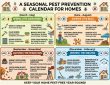
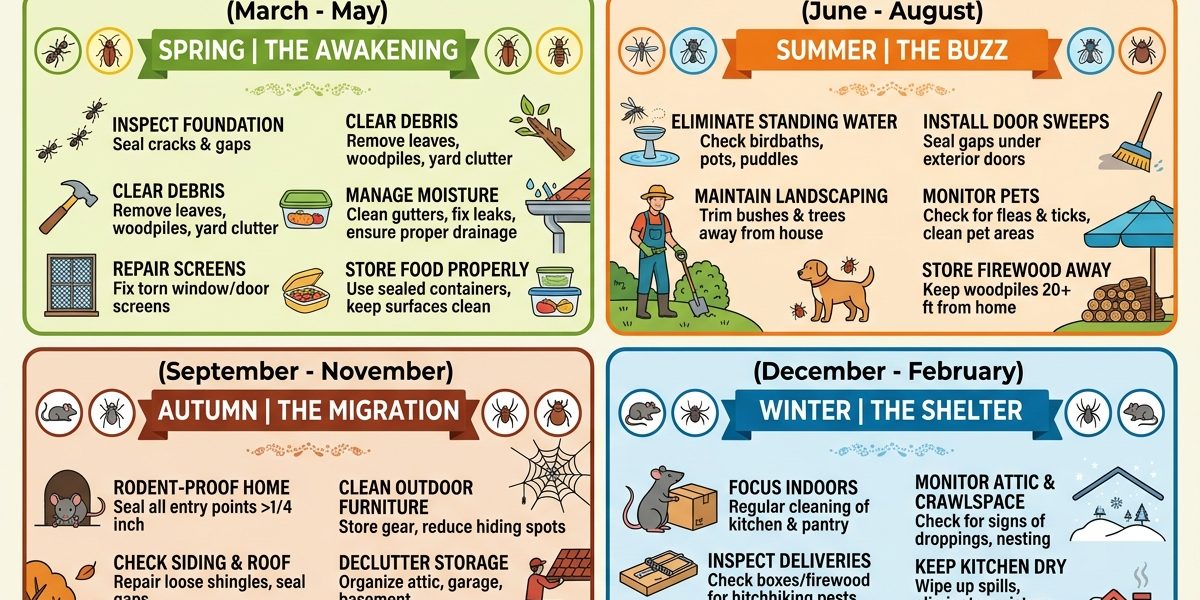
Winter: Check for Hidden Entry Points
Winter is an ideal time to look for pests seeking warmth and protected nesting areas. Examine door sweeps, window frames, foundation cracks, attic vents, utility openings, and garage-door seals. Look in basements, attics, crawl spaces, and storage areas for droppings, gnaw marks, shredded paper, nesting material, or unfamiliar sounds inside walls. Keep firewood away from exterior walls, and avoid storing cardboard, fabric, or clutter directly on garage and basement floors. Repair damaged screens now, before spring insect activity begins. If stored belongings must remain in place, leave a small gap around the walls to make inspections easier.
Early Spring: Watch for New Activity
After winter rain, snowmelt, or freeze-thaw cycles, inspect the foundation and lower exterior walls. Watch for damp wood, mud tubes, winged insects, or small piles of sawdust-like material. These signs do not always identify one specific pest, but they are worth documenting with photos and dates. Clean gutters, confirm that downspouts direct water away from the foundation, and trim branches that touch siding, windows, or the roof. Check garden beds and trees for egg masses, leaf damage, or early insect activity. Local weather matters more than a fixed date, so begin these tasks when temperatures and plant growth start to rise in your area.

Late Spring: Reduce Food, Water, and Shelter
Late spring is the time to remove the everyday conditions pests need: repair dripping faucets, irrigation leaks, damaged hose connections, and plumbing issues beneath sinks. Keep trash lids closed, rinse recycling containers, and store pet food, birdseed, and dry goods in durable sealed containers rather than open bags. Outside, remove leaf piles, excess mulch, fallen fruit, and dense debris near the house. Inspect patios, sheds, play equipment, grills, and outdoor furniture for nests, webs, or insects gathering in protected corners. Keeping vegetation and stored materials from pressing against the home also makes entry points easier to see.
Summer: Focus on Water and Outdoor Living Areas
Summer pest prevention should include a weekly yard walk, especially after rain. Empty, cover, turn over, or clean items that collect water, including buckets, planters, toys, birdbaths, flowerpot saucers, and tarps. The CDC recommends checking water-holding containers weekly to stop mosquitoes from laying eggs in or near water. Keep window and door screens closed, and repair even small tears. Clean outdoor dining spaces promptly after meals, remove fallen food beneath grills, and keep grass trimmed around foundations and walkways. Check decks, porches, sheds, and shaded corners for wasp nests or spider webs, but avoid disturbing an active nest in a high-traffic area.
Fall: Prepare Before Pests Move Indoors
As temperatures cool, many pests look for indoor shelter. Seal gaps around pipes, cables, vents, doors, windows, and siding. Inspect the roofline, chimney area, attic vents, and garage door weatherstripping. Replace worn sweeps and screens before cold weather makes indoor access more appealing. Remove fallen fruit and garden debris, and move stored items away from walls. This makes rodent activity easier to spot and reduces the number of hiding places. Recheck food storage in pantries, garages, and sheds, particularly for animal feed and birdseed, which may attract rodents or insects.
A Monthly Home Pest Check in 15 Minutes
- Walk the exterior perimeter and look for cracks, holes, moisture, damaged screens, and plants touching the structure.
- Check kitchens, bathrooms, garages, basements, and storage areas for leaks, droppings, food debris, or damaged packaging.
- Inspect yard items and containers for standing water.
- Photograph unusual signs and note the date and location.
- Correct small problems promptly, such as sealing a gap or cleaning a spill, before considering treatment.
How to Choose a Safer Treatment Option
Identify the pest before choosing a product. A single insect does not always require treatment, and the wrong product can create unnecessary exposure without solving the problem. Start with nonchemical steps such as cleaning, drying, sealing, trapping, and removing shelter. If a pesticide is needed, read the entire label and follow all directions for application, storage, and disposal. Use the smallest effective amount, keep children, pets, food, and personal items away from treatment areas, and never mix products unless the labels specifically allow it.
When a Homeowner Should Ask for Help
Seek qualified help when the same pest keeps returning after prevention steps, when there are signs of structural or moisture damage, or when activity appears in multiple rooms or inside walls. Professional evaluation is also appropriate for stinging insects near doors or play areas, suspected hidden nests, health-related concerns, or pests that cannot be confidently identified.
Common Questions About Seasonal Pest Prevention
Do pests disappear in winter?
Not necessarily. Outdoor activity may slow, but pests can remain active in heated rooms, wall voids, attics, basements, and garages.
How often should a property be checked?
A quick monthly inspection is a useful baseline, with more detailed checks in spring and fall. Homes with moisture issues, dense landscaping, or a history of infestations may need closer monitoring.
Is cleaning enough to prevent pests?
Cleaning helps, but complete prevention also requires limiting entry points, moisture, warmth, and shelter.
A Simple 2026 Prevention Checklist
- Every week: Remove standing water and check food storage areas.
- Every month: Inspect entry points, moisture spots, storage rooms, and the exterior perimeter.
- Each season: Adjust yard care, sealing, storage, and monitoring tasks.
- After storms: Check drainage, gutters, screens, rooflines, and damp areas.
- After a pest sighting: Identify the pest, document the location, and look for food, water, shelter, or an entry point.
Conclusion
A seasonal pest prevention plan does not need to be complicated. Regular checking, cleaning, sealing, and moisture control can prevent many common household problems. When these small tasks become routine, homeowners can act sooner, use fewer unnecessary products, and reduce the chance that a minor warning sign becomes a costly repair. Check kitchens, bathrooms, garages, storage areas, windows, doors, and exterior walls for signs of pests, leaks, cracks, or clutter. Keep food in sealed containers, clean spills promptly, remove standing water, and keep vegetation from touching the home. Seasonal inspections are especially useful after heavy rain, extreme heat, or changes in landscaping and irrigation. If droppings, nests, repeated sightings, or property damage persist despite basic prevention measures, consider identifying the source and seeking appropriate professional guidance. A consistent routine helps keep the home cleaner, more comfortable, and less inviting to pests throughout the year.